
Thrift & Antique Finds How It Works
Eight Signs a Second-Hand Find Is Actually Worth Buying
How to check furniture, china, textiles and tools in about thirty seconds, using the construction details that separate the well-made from the merely old.

Everything below can be checked in under a minute, standing in a shop, without tools and without specialist knowledge. None of it guarantees value, because value depends on demand — but all of it separates things that were made properly from things that were made cheaply.
1. Pull out a drawer and look at the joint
This is the single most useful check in furniture.
Dovetail joints at the corners mean the drawer was made to resist being pulled apart, which is exactly the force a drawer experiences. Hand-cut dovetails are slightly irregular and usually few in number; machine-cut ones are perfectly even. Both are good signs.
Butt joints held with nails, staples or glue alone mean the piece was made to a price. Not necessarily worthless, but not built to last either.
While the drawer is out, look at the bottom panel. A thin panel sitting in a groove, able to move with humidity, is proper construction. A panel stapled flat to the underside is not.

.png)
2. Check whether it is solid timber or veneer over board
Look at an edge, a corner or an underside. Solid timber shows continuous grain running through the thickness; the grain on the top will relate to the grain on the edge.
Veneer over solid wood is completely legitimate and has been used on the finest furniture for centuries. Veneer or printed paper over chipboard or MDF is not the same thing, and the giveaway is the edge: a strip that stops abruptly, or a repeating grain pattern.
3. Lift it
Weight is a crude test and a surprisingly reliable one. Solid hardwood, real ceramic, proper glass and cast metal are all noticeably heavier than their modern substitutes.


4. Turn china over and look at the foot ring
The unglazed ring on the base of a plate tells you a lot. Fine, dense, white or off-white body with a smooth foot suggests good quality porcelain or bone china. Coarse, grey, gritty or pitted suggests earthenware made quickly.
Hold a plate up to a strong light. Fine bone china is translucent enough that you can see the shadow of your fingers through it. Earthenware is not.
5. Read the mark, but do not rely on it
Maker’s marks are useful and frequently copied. What is more informative is the combination: a mark that matches the body, the glaze, the shape and the wear.

_-_Plate_-_1923.299_-_Cleveland_Museum_of_Art.jpg)
A note on wear, which is the detail most reproductions get wrong: a plate that has been used for eighty years will have fine scratches in the glaze from cutlery, and the foot ring will be slightly worn where it has sat on shelves. Both are very hard to fake convincingly and very easy to check.
6. On textiles, check the selvedge and the seams
Look at the edge of the fabric and at the inside of a seam. Generous seam allowances, hand-finished edges, French seams and matched patterns across a join all indicate that the maker was not rationing cloth or time.
For blankets and knitwear, a burn test is not available in a shop, but feel and weight are. Wool recovers when scrunched; synthetics stay creased and feel slick.
7. On tools, look at the handle and the tang
A tool with a forged blade running well into the handle, secured with rivets or a proper ferrule, was made to be used for decades. A blade held in a moulded plastic grip was not.
Rust on a good tool is almost always superficial and comes off. Pitting is different and is worth avoiding, because it never fully goes.
8. Decide what the repair costs before you buy
This is the one that saves the most money.


Reupholstery, re-plating, replacing missing glass and re-veneering are all skilled jobs with real costs attached, and they are frequently several times the purchase price. A beautifully made chair that needs a hundred pounds of work is still a bargain. A mediocre chair that needs the same hundred pounds is not.
The thing that is genuinely worth more than any of this
Look at what has survived in daily use. An object that has been used constantly for sixty years and is still functioning has already passed a longer test than any inspection you can carry out in a shop.
Where this came from
- Furniture construction and connoisseurship — Victoria and Albert Museum
- Ceramics marks and identification — The British Museum
- Care and identification of textiles — Museums Victoria

Read next
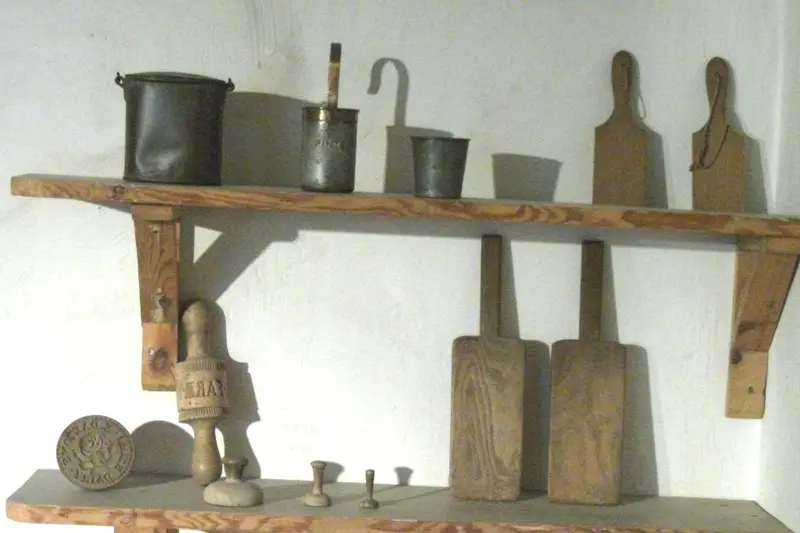 Guess It
 There Is One in Almost Every Kitchen Drawer. What Was It Actually For?
A flat metal disc with a wooden handle and a rippled edge, found in kitchen drawers everywhere. Here is what it did, and the three objects people usually confuse it with.
 How It Works
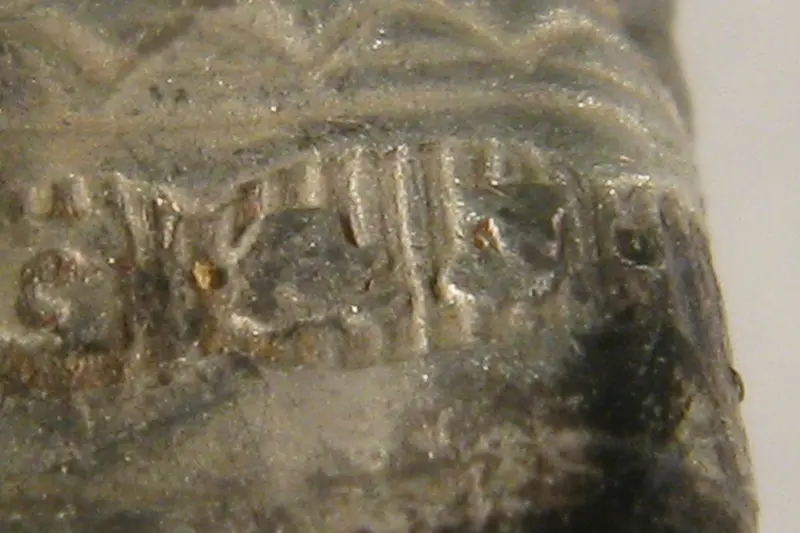
 How to Read a Hallmark in Four Steps
The tiny marks stamped into silver tell you the metal, the town, the year and the maker. Here is how to read them, and what the same marks look like when faked.
 How It Works
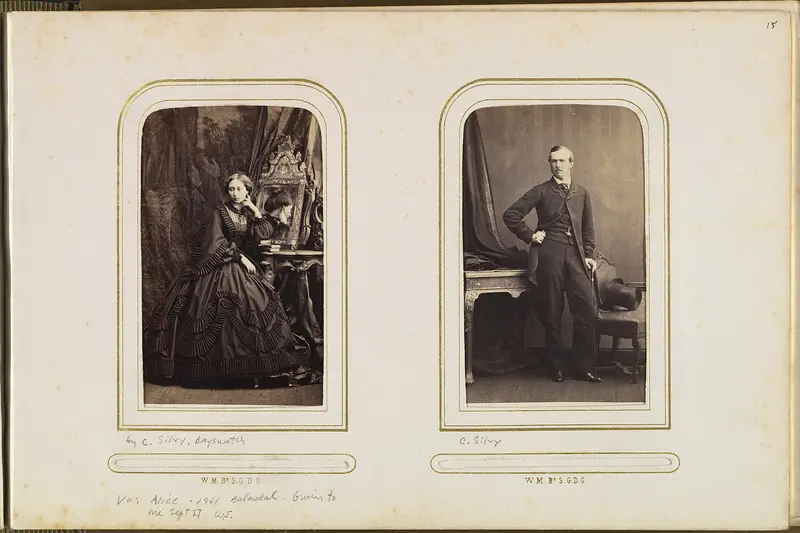
 How to Date an Old Photograph in Six Steps
A practical method for working out when a family photograph was taken, using the process, the mount, the clothing, the background and the details in the corners.