
Strange Jobs & Professions Countdown
Ten Jobs That Existed in Living Memory and Do Not Now
Switchboard operators, lift attendants, typesetters and the man who lit the streetlamps. Ten vanished occupations, what the work involved, and what replaced each one.

Every generation loses a set of occupations, usually without much ceremony. The job stops being advertised, the last few people retire, and within about ten years it becomes something you have to explain.
What is striking about the list below is how recent most of it is. These are not medieval trades. Several were substantial employers within the lifetimes of people still working.
Ten of them, counting up to what actually happens when work disappears.
-
Number 10: The switchboard operator
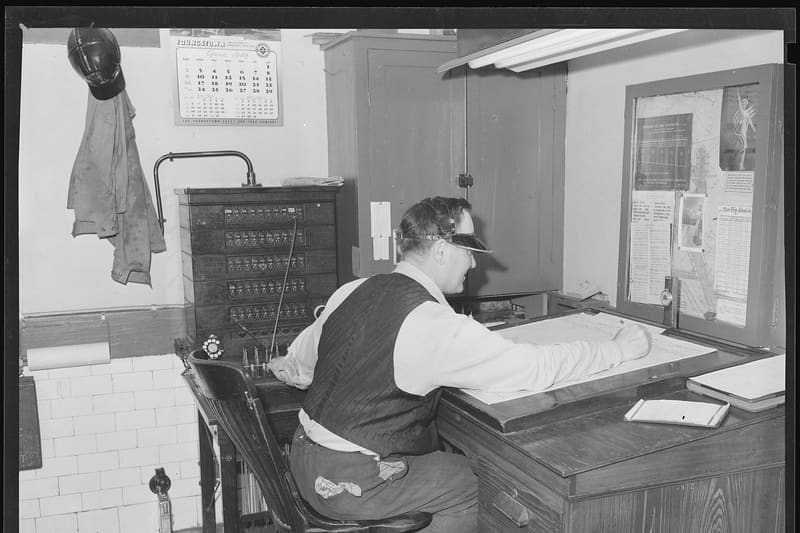
Russell Lee — Public domain — Wikimedia Commons Every call was physically connected by a person plugging a cord into a jack. It was a very large employer, particularly of women, and required knowing a board, a set of protocols and often the local area intimately. Automatic exchanges removed it over several decades, though manual boards survived in institutions well into the 1980s.
-
Number 9: The lift attendant

Pedro Ribeiro Simões from Lisboa, Portugal — CC BY 2.0 — Wikimedia Commons Early lifts needed an operator to control speed and to stop level with the floor, which took skill. Automatic levelling and push-button controls removed the need, though attendants persisted in some prestigious buildings long after the technology had made them unnecessary.
-
Number 8: The compositor and the linotype operator
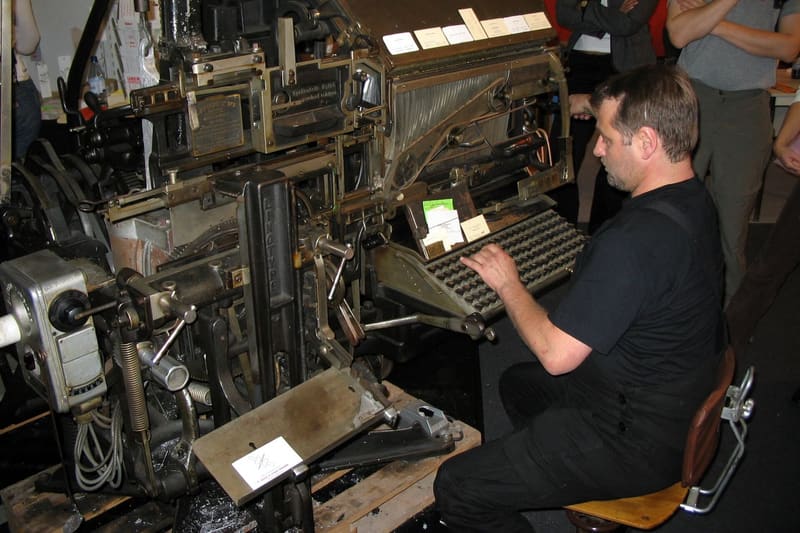
Kucharek — Public domain — Wikimedia Commons Printed text was assembled from metal type, by hand or by machine, by skilled workers serving long apprenticeships. Photo-typesetting and then computer typesetting eliminated an entire craft within about two decades, in one of the most abrupt occupational transitions of the twentieth century.
-
Number 7: The lamplighter
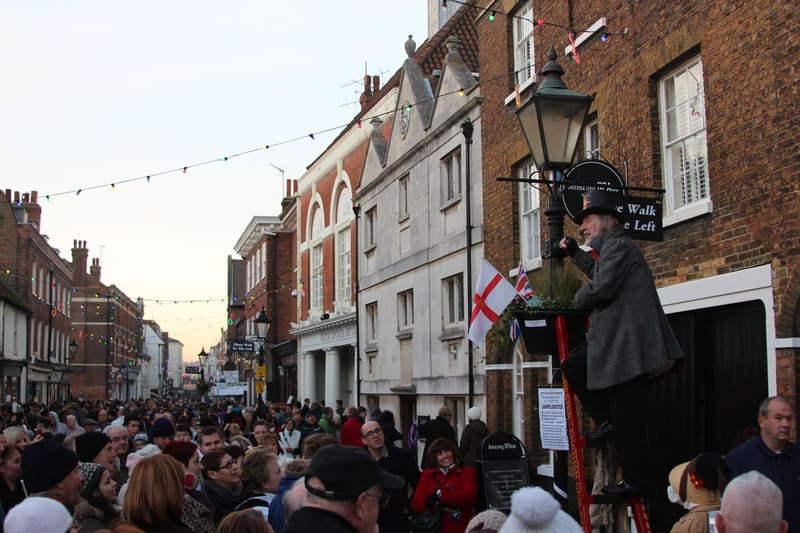
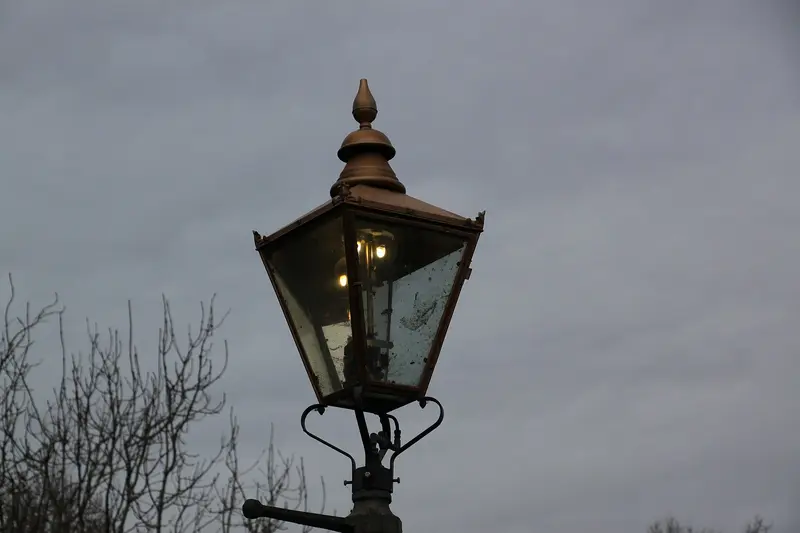
Oast House Archive — CC BY-SA 2.0 — Wikimedia Commons Gas streetlamps were lit and extinguished individually, on foot, twice a day, by a person with a long pole. Timers and electric lighting removed the job, although a small number of gas lamps are still maintained by hand in a few cities as heritage.
-
Number 6: The knocker-up
Illustration: World of Curious Paid to wake shift workers before alarm clocks were cheap and reliable, using a long pole to tap on upstairs windows. It survived in industrial towns into the twentieth century and disappeared with affordable alarm clocks.
-
Number 5: The pin setter
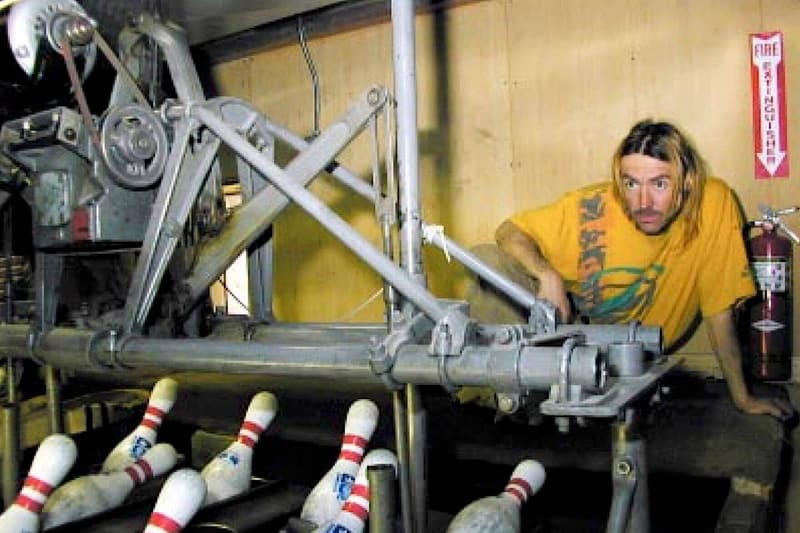
Jeff Inglis, credited photographer, working for The Antarctic Sun — Public domain — Wikimedia Commons Bowling alleys employed people, often teenagers, to reset the pins by hand between frames. Automatic pinsetters from the 1940s and 1950s removed the job completely.
-
Number 4: The human computer
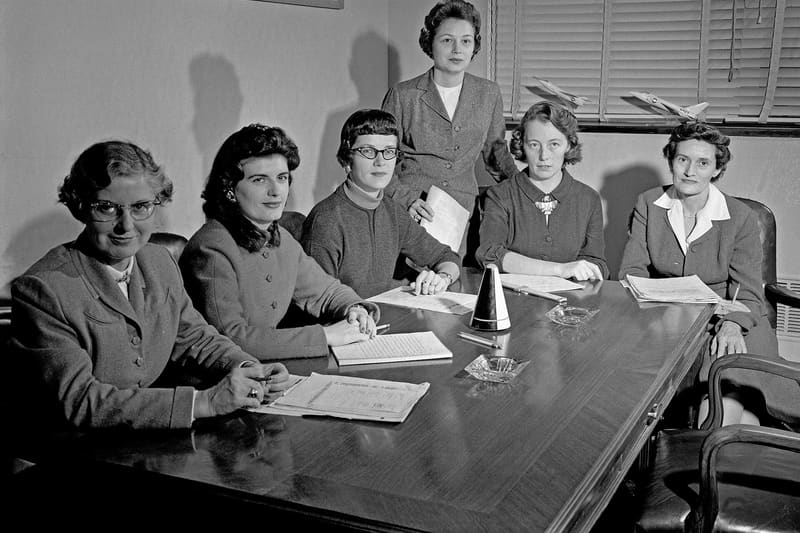
NASA — Public domain — Wikimedia Commons Before electronic computing, calculation was done by large teams of people, frequently women, working through mathematical tables and long computations by hand. They produced navigational tables, ballistics data and astronomical calculations, and several were central to early space and aeronautical programmes.
-
Number 3: The ice cutter and the ice man
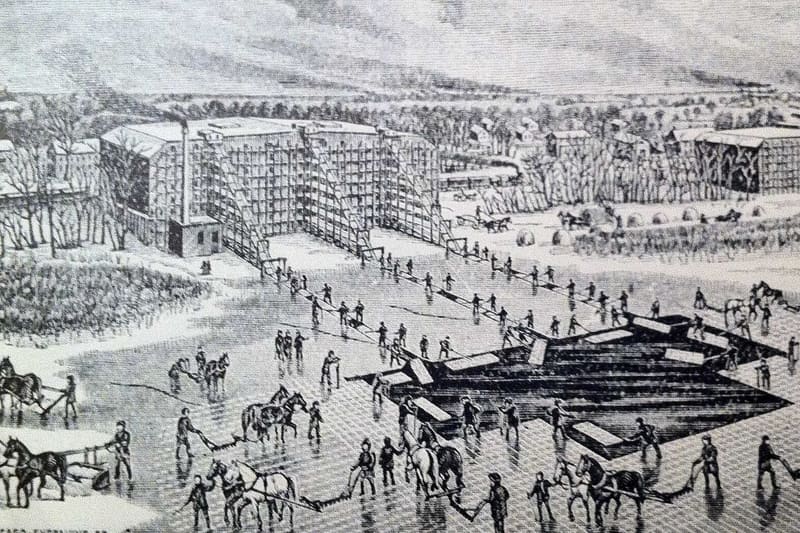
Chicago Engraving — Public domain — Wikimedia Commons Before domestic refrigeration, ice was cut from frozen lakes in winter, stored in insulated ice houses, and delivered to households. It was a substantial international industry with its own tools, vocabulary and hazards, and it disappeared within roughly a generation of the domestic fridge.
-
Number 2: The typist pool
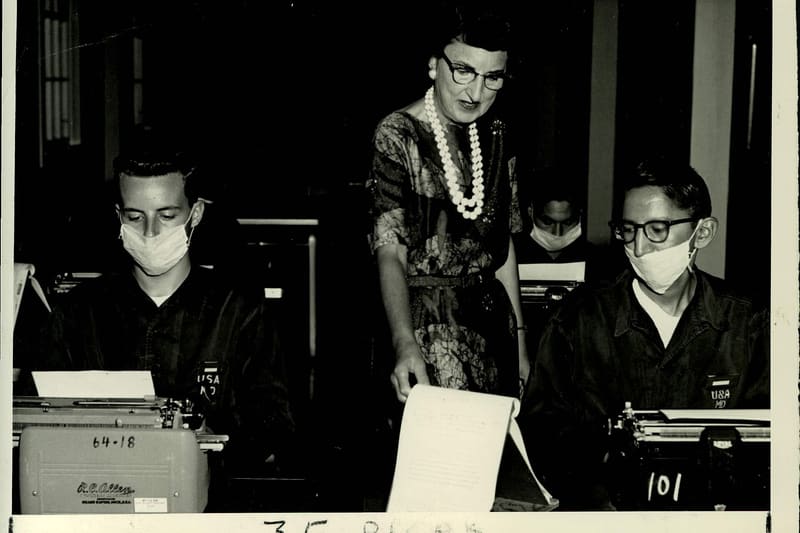
Department of Defense. Department of the Army. Office of the Surgeon — Public domain — Wikimedia Commons Large organisations employed rooms full of typists producing documents dictated by others. Word processing and then personal computing moved the typing to the author, which eliminated the role and quietly transferred the work to everybody else.
-
And the strangest one of the lot
Number 1: What actually happens when a job disappears
Illustration: World of Curious The pattern across all of these is worth stating, because it is usually described badly. Jobs are very rarely replaced by a machine doing the same job. What happens is that a task gets redistributed: the switchboard operator's routing work moved into the exchange, the typist's work moved to the person writing the document, the lamplighter's work moved into a timer, and the compositor's work moved partly into software and partly onto the author. Employment in the wider sector often grew rather than shrank, but the specific skill, the specific apprenticeship and the specific community around it did not transfer. That is the part that mattered to the people involved, and it is the part that gets left out of the cheerful version of this story.


.jpg)


The best record of vanished work is the census. Occupational descriptions from a century ago are extraordinary reading, and most national archives have them available.
Where this came from
- Working life and industry collections — Science Museum Group
- Occupational history and census records — The National Archives
- History of technology and employment — Encyclopaedia Britannica

Read next
 Countdown
 Nine Customs That Were Completely Normal and Now Sound Extraordinary
Sin eaters, waking services, mourning warnings and a professional knocker-up. Nine historical customs, and the practical problem each one solved.
 Guess It
 What Was This Strange Household Object Actually Used For?
A heavy glass dome with a hole in the top, found in sideboards and attics everywhere. Three plausible answers, and one that is correct.
 Guess It
 Which Cost More? Eight Price Comparisons From the Past
Not exact prices, which nobody remembers reliably, but the comparisons: which of two things cost more at the time, and what that says about the period.