
Bizarre Historical Customs Countdown
Nine Customs That Were Completely Normal and Now Sound Extraordinary
Sin eaters, waking services, mourning warnings and a professional knocker-up. Nine historical customs, and the practical problem each one solved.

Customs look absurd from outside, which is a limitation of the viewer rather than the custom. Every one of them was a solution to a problem, and usually a problem that no longer exists.
Nine of them below. They come from a range of periods and places, and the evidence for some is much better than for others — which is noted where it matters.
Counting up to the one that has changed most completely.
-
Number 9: The knocker-up

Illustration: World of Curious A person paid by the week to wake workers for an early shift, tapping on upstairs windows with a long pole or occasionally shooting dried peas at the glass. It existed because alarm clocks were expensive and unreliable and mill shifts were unforgiving, and it persisted in some industrial towns well into the twentieth century.
-
Number 8: Hiring fairs
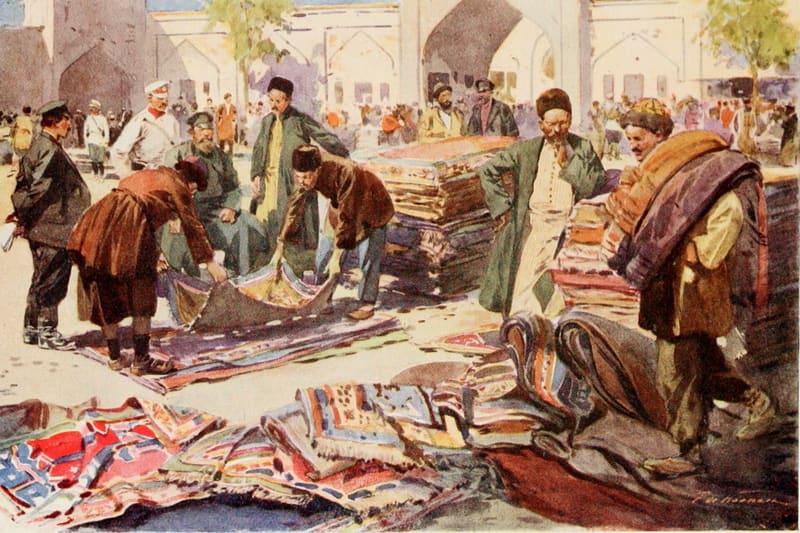
Internet Archive Book Images — No restrictions — Wikimedia Commons Agricultural workers gathered in a market town on a set day each year and stood to be hired for the coming year, sometimes carrying a token of their trade. It was a functioning labour market with a calendar, and the annual cycle shaped everything from wedding dates to when families moved house.
-
Number 7: Mourning cards and black-edged paper

Illustration: World of Curious Bereavement was announced by printed cards and by writing paper with a black border, the width of which narrowed as the mourning period progressed. In a period without telephones it was an efficient way of telling correspondents at a glance how to write to you.
-
Number 6: Sin eating

Illustration: World of Curious A custom recorded chiefly in parts of Wales and the English borders, in which a person was paid a small sum to eat food passed over a corpse, symbolically taking on the sins of the deceased. Accounts are relatively sparse and mostly second-hand, so historians treat the details with some caution, but the practice is documented.
-
Number 5: Telling the bees

Illustration: World of Curious A widespread custom of formally informing the household bees of a death in the family, sometimes draping the hive in black. Attested across Britain and parts of Europe and North America, and still occasionally observed.
-
Number 4: The waits
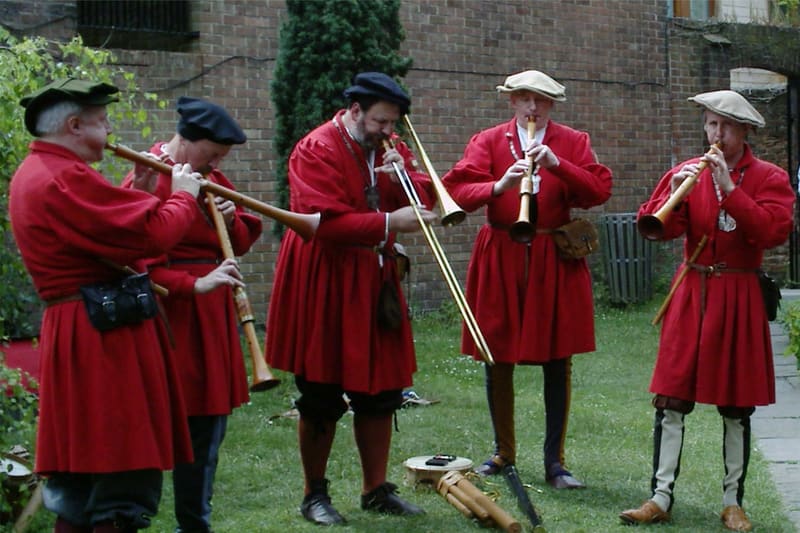
Trombone-angel — Public domain — Wikimedia Commons Official town musicians, employed to play at civic occasions and to patrol at night, later associated with Christmas music. Many towns had them on the payroll for centuries.
-
Number 3: Charivari
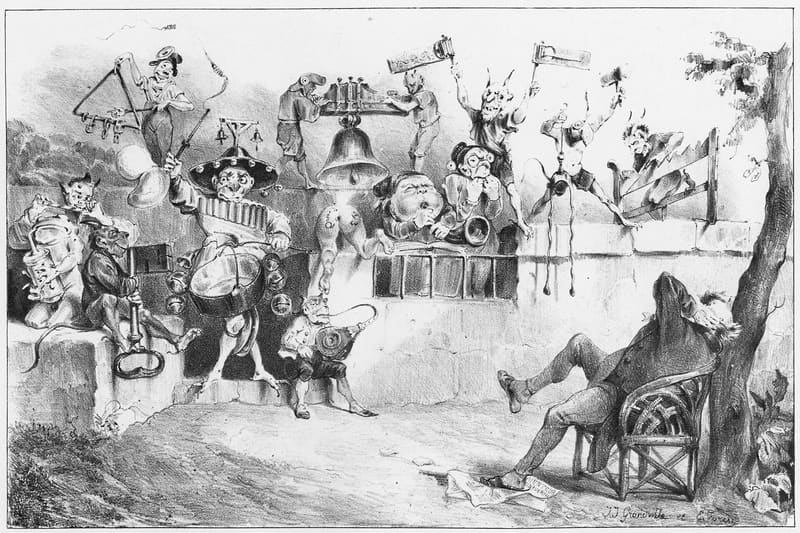
Jean Ignace Isidore Gérard Grandville — Public domain — Wikimedia Commons A noisy, ritualised public shaming — banging pots, parading effigies — directed at people who had broken local social expectations, particularly around marriage. It was community enforcement without any legal apparatus, and it was taken seriously enough to end up in court records.
-
Number 2: Beating the bounds

David Tyers — CC BY-SA 2.0 — Wikimedia Commons An annual walk of the parish boundary, in which children were sometimes bumped against boundary markers so that they would remember where the line was. In the absence of reliable maps, human memory was the record, and the custom was a deliberate way of maintaining it.
-
And the strangest one of the lot
Number 1: Waking the dead at home
Illustration: World of Curious For most of history, someone who died at home stayed at home. The body was washed and laid out by family or a local woman known for the job, kept in the parlour for several days, and visited by neighbours before the funeral. The custom seems startling now precisely because of how completely it has been reversed: death moved out of the house and into institutions within about two generations, and with it went the parlour, the laying-out, the vigil and the whole vocabulary that surrounded them. Almost every entry on this list disappeared the same way — not because anyone decided it was strange, but because the practical circumstances that required it stopped existing.


.jpg)


The question worth asking of any old custom is not why did they do that, but what problem were they solving. There is almost always an answer.
Where this came from
- Social history collections — Museum of London
- Folklore and custom collections — The British Library
- Working life and occupations in industrial Britain — Science Museum Group

Read next
 Countdown
 Eight Everyday Victorian Habits That Seem Bizarre Now
Mourning rules, post-mortem photographs, arsenic wallpaper and a bathing machine. Eight Victorian habits, and the entirely logical reasons behind each one.
 Countdown
 Ten Things About Daily Life in Ancient Rome That Sound Modern
Takeaway food, block-of-flats living, graffiti about the neighbours and complaints about the landlord. Ten details of Roman daily life from the surviving evidence.
 Countdown
 Seven Countries That Existed and Then Did Not
Short-lived states, federations that dissolved and republics that lasted months. Seven examples, and what each one reveals about how borders actually work.