
Amazing Renovations Countdown
Nine Things Renovators Find Behind the Plasterboard
Blocked fireplaces, hidden doorways, newspapers used as insulation and a staircase that goes nowhere. What old houses are actually hiding, and which finds change the budget.

Old houses are rarely what the survey says, because a survey can only report what is visible. Everything interesting is behind something else.
The finds below are the ones that come up again and again, and they fall into three groups: things that are good news, things that are simply history, and things that materially change the budget.
Nine of them, counting up to the one nobody wants.
-
Number 9: A blocked fireplace, still with its opening intact
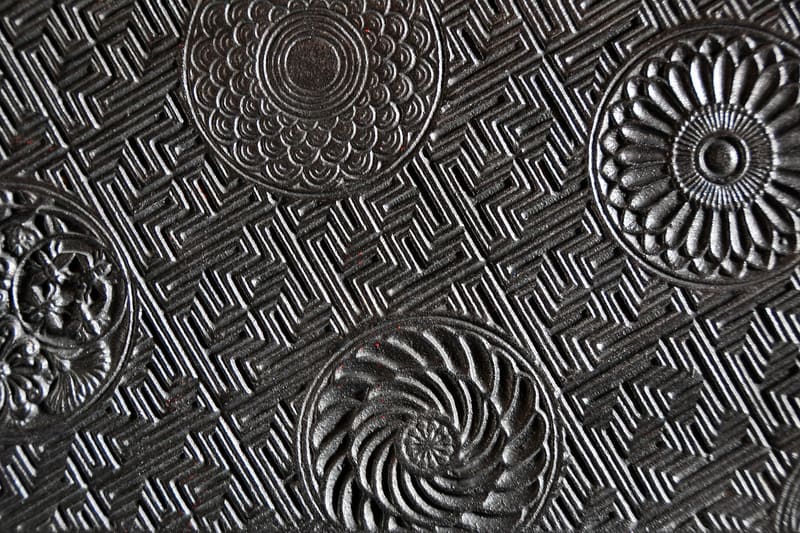
xlibber — CC BY 2.0 — Wikimedia Commons Extremely common in houses from the 1960s onwards, when central heating arrived and fireplaces were boarded over. The original opening, hearth and sometimes the cast-iron insert are often entirely undamaged behind the board, which is why reinstatement is usually cheaper than expected.
-
Number 8: Newspaper used as insulation
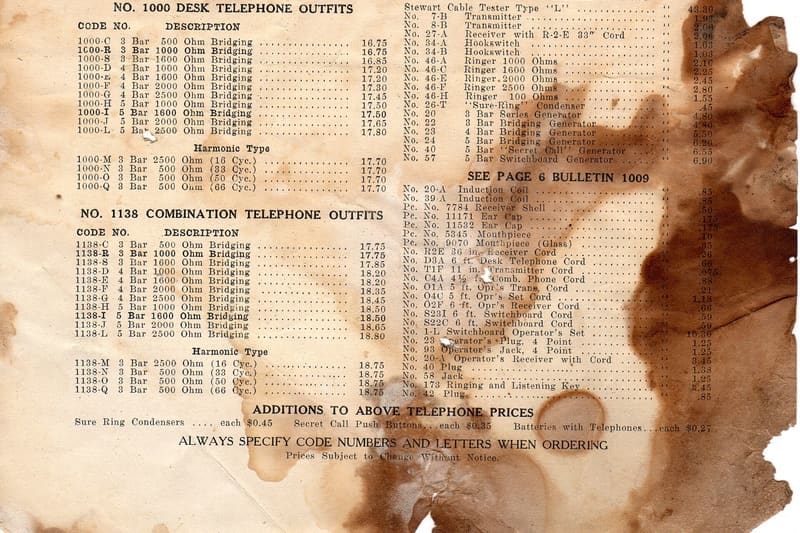
CDHS — No restrictions — Wikimedia Commons Stuffed into voids, around pipes and under floors, often in enormous quantities. It is a fire risk, it holds moisture and it does very little insulating. It is also the most reliable dating evidence in the whole house, because someone has helpfully printed the date on it.
-
Number 7: A doorway that was bricked up
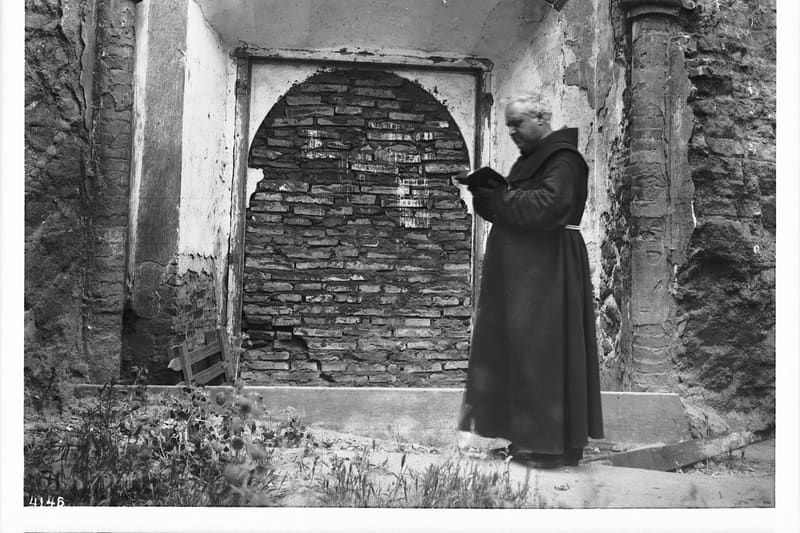
C. C. Pierce — Public domain — Wikimedia Commons Rooms get reconfigured, and the cheapest way to remove a door is to block it and plaster over. The giveaway is usually a change in floorboard direction or a patch of different plaster, and the opening above the blockwork often survives intact.
-
Number 6: Original cornice and picture rails under boxing
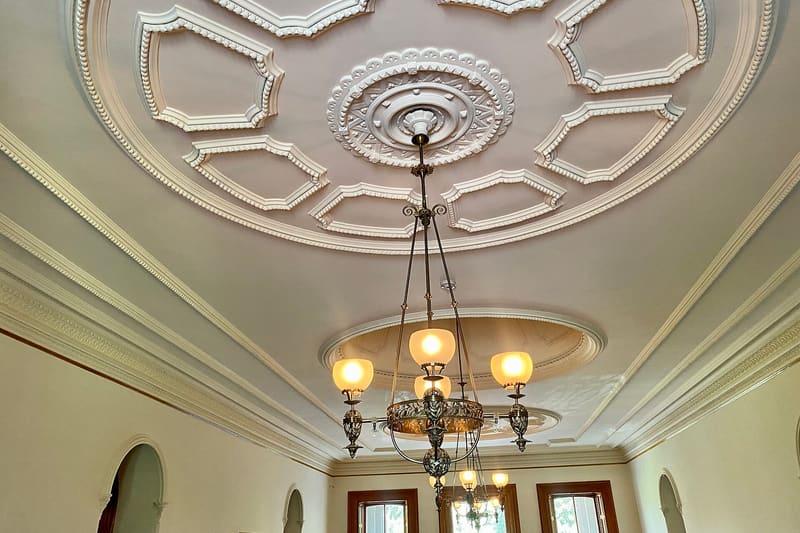
w_lemay — CC BY-SA 2.0 — Wikimedia Commons Where a ceiling has been lowered — very common in the 1960s and 1970s — the original detail is frequently still there above the new one. This is one of the genuinely good finds, and it is worth a careful look before anything is taken out.
-
Number 5: Redundant pipework and dead services
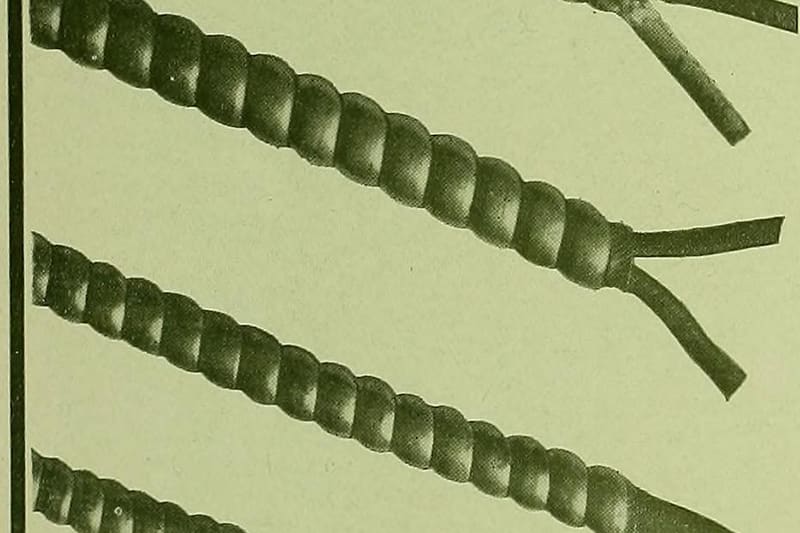
Internet Archive Book Images — No restrictions — Wikimedia Commons Gas pipes for lighting, lead water pipes, old wiring in rubber or fabric insulation. Most of it is capped and abandoned rather than removed. Some of it is not capped, which is why nothing gets cut without being traced first.
-
Number 4: A staircase to nowhere
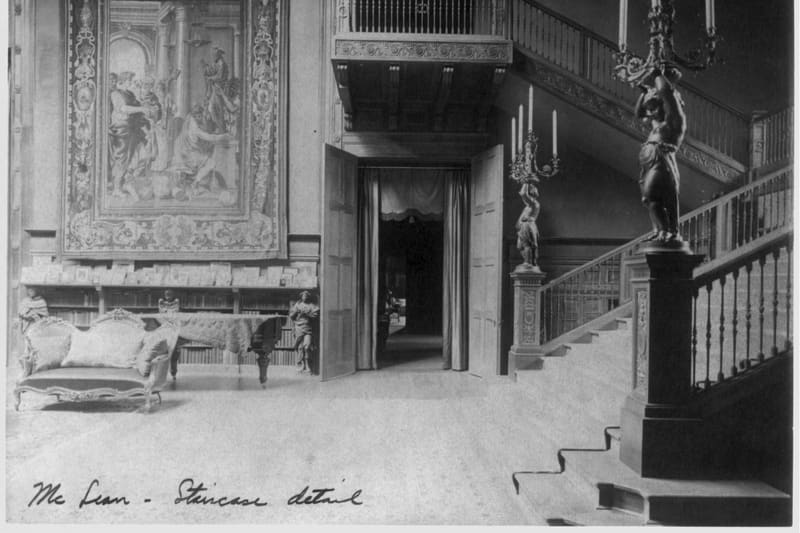
Johnston, Frances Benjamin, 1864-1952, photographer — Public domain — Wikimedia Commons Houses subdivided into flats and then reunited often retain fragments of the original circulation. Half a flight behind a stud wall, or a landing that has become a cupboard, is a very common find in large Victorian houses.
-
Number 3: Shoes and other deliberate deposits

Edmund Patrick — CC BY-SA 3.0 — Wikimedia Commons Concealed shoes, and occasionally other objects, are found in chimneys, under floors and around door frames in considerable numbers. Museums hold thousands of examples. The practice appears to have been apotropaic — intended to protect the household — and it persisted for centuries.
-
Number 2: Damp caused by something recent, not something ancient
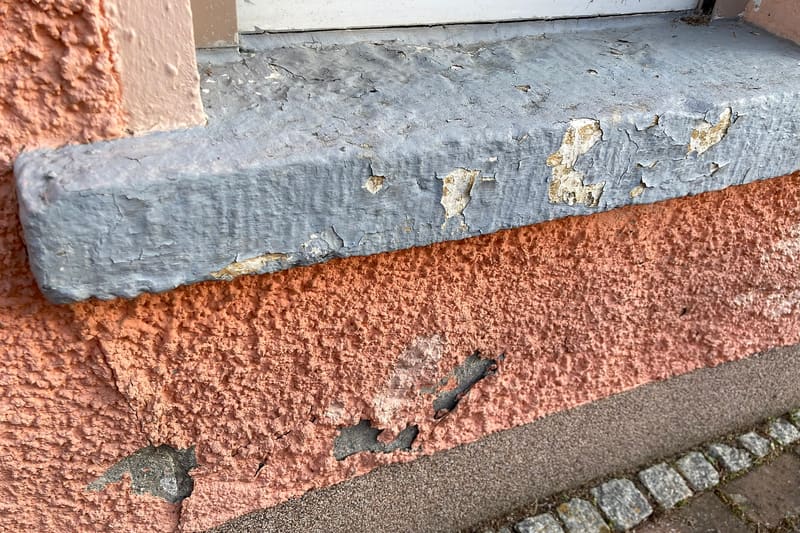
Kai Kemmann — CC BY-SA 4.0 — Wikimedia Commons The most common structural discovery, and the most misdiagnosed. Rising damp is far rarer than the treatment industry suggests; the usual culprits are a raised external ground level, a blocked cavity, a failed gutter or a bridged damp course. Finding the actual cause usually costs less than treating the wrong one.
-
And the strangest one of the lot
Number 1: The wall that was holding something up
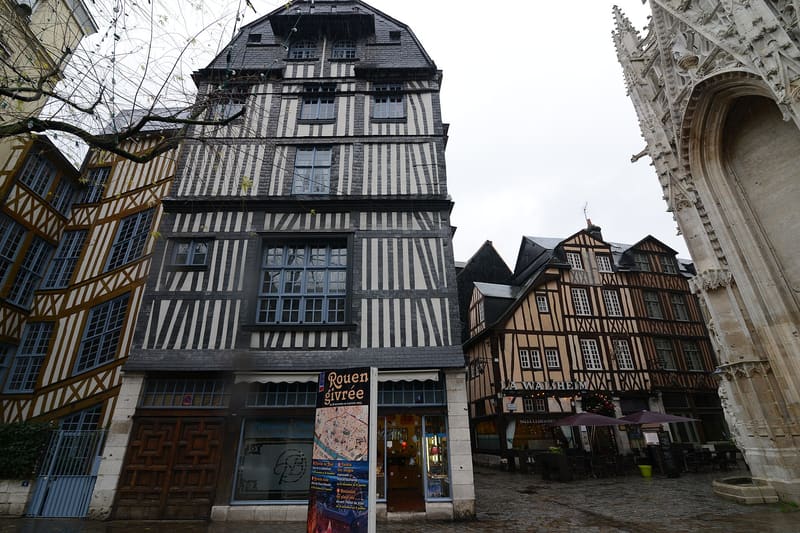
Jorge Láscar from Melbourne, Australia — CC BY 2.0 — Wikimedia Commons This is the find that changes everything, and it is the reason nothing comes out of an old house on a hunch. Buildings that have been altered repeatedly often end up with loads travelling through elements that were never designed to carry them — a stud wall that has become structural because a beam above it sagged onto it, a chimney breast removed downstairs and left in place upstairs, a staircase doing bracing work nobody intended. None of this is visible from either side of the plaster. It is why the first cost in a serious renovation is usually a structural engineer, and why that is the cheapest money anyone spends on the project.


.jpg)
.jpg)
.jpg)

_(14803613933).jpg)


,_im_Sockelbereich_erg%C3%A4nzt_mit_modernem_kunstharzgebundenem_Buntsteinputz,_Am_Dorfanger_(34),_Legefeld,_99428_Weimar_03.jpg)
.jpg)
The useful rule with an old house is that everything was done for a reason, even the bad decisions. Find the reason before you undo it.
Editor's note: Any work affecting a wall that might be structural, or any building that is listed or in a conservation area, needs professional advice before anything is removed. Pre-1999 buildings may also contain asbestos, which must be identified and handled by qualified people.
Where this came from
- Guidance on repairing historic buildings — Historic England
- Traditional building materials and construction — Society for the Protection of Ancient Buildings
- Building regulations and structural guidance — Royal Institute of British Architects

Read next
 Explainer
 Why Houses From Each Decade Look the Way They Do
Ceiling heights, window sizes, room layouts and roof pitches all changed for practical reasons. A decade-by-decade guide to reading a house from the outside.
 Countdown
 Nine Houses That Exist Because of a Rule, a Tax or an Argument
Impossibly narrow homes, buildings constructed out of spite and windows bricked up on purpose. Nine architectural oddities with an entirely administrative explanation.
 Guess It
 There Is One in Almost Every Kitchen Drawer. What Was It Actually For?
A flat metal disc with a wooden handle and a rippled edge, found in kitchen drawers everywhere. Here is what it did, and the three objects people usually confuse it with.