
Visual Puzzles Visual Sequence
Which Shape Comes Next? Four Panels and One Rule
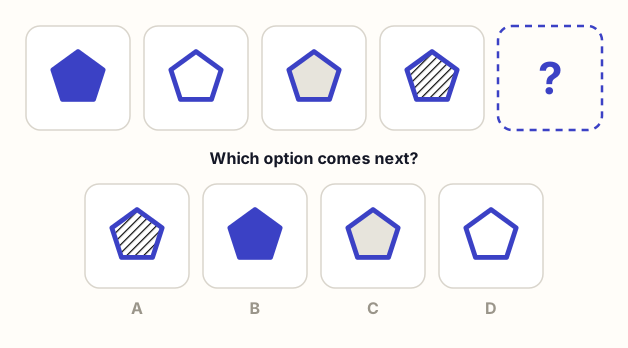
A visual sequence where a single transformation is applied at every step. The fifth panel is computed from the rule, not chosen, so exactly one of the four options can be right.
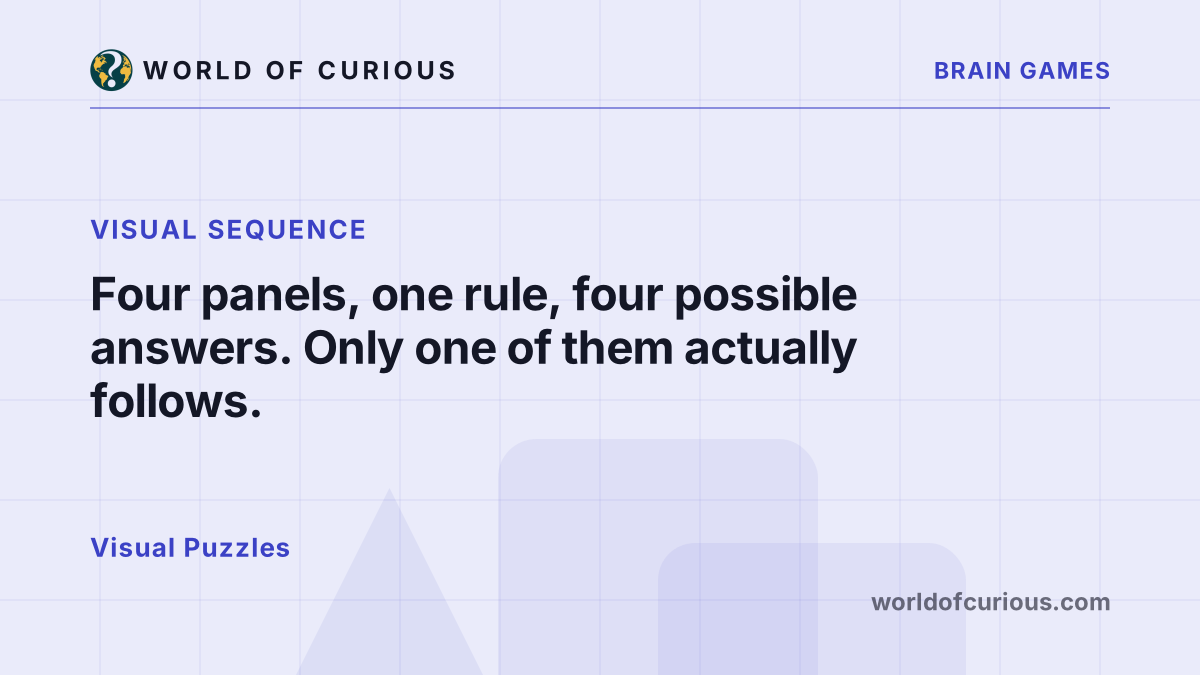
Visual sequences are the pictorial version of a number sequence, and they have the same failure mode: if the rule is not clearly the simplest one available, two answers become defensible and the puzzle falls apart.
This one is built to avoid that. A starting shape is chosen, a single transformation rule is chosen, and the rule is applied once per panel. The fifth panel is then computed rather than drawn by hand.
How the wrong answers are made
The three incorrect options are not random. Each one is a specific, recognisable mistake:
- the previous panel repeated, which is what happens if you forget to apply the rule at all
- the rule applied twice, which is what happens if you double-count the step
- the rule applied backwards, which is what happens if you read the sequence in the wrong direction
Building distractors this way is deliberate. Options that are obviously wrong make a puzzle trivially easy; options that correspond to real errors make it fair and instructive, because when you pick one you learn something about where you went wrong.
The check
Before publishing, a validator replays the rule from the starting panel, confirms that every visible panel matches, computes the answer panel, and then checks that exactly one of the four options matches it. It also checks that no two options are visually identical.
If more than one option matched, the puzzle would be discarded. That is the whole reason for doing it this way round.
Have a look, commit to a letter, then open the reveal — which also states the rule in plain words.
Medium Which option completes this sequence?
Reveal the answer
Answer B
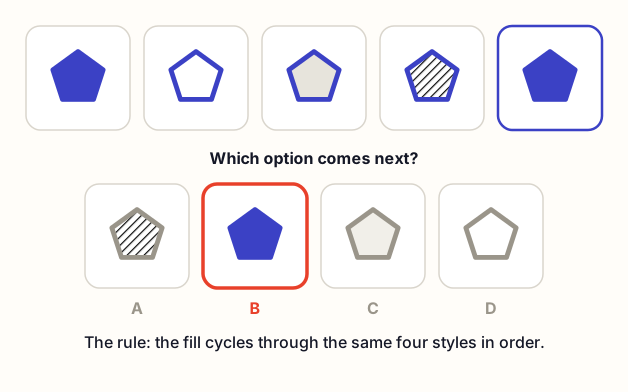
The answer is B, because the fill cycles through the same four styles in order. Carrying that on from the fourth panel gives exactly the shape shown in option B.
Read next
 Number Sequence
 What Comes Next? A Sequence With Exactly One Rule
Most sequence puzzles are broken, because several answers fit. This one is generated from a single stated rule, and a validator recalculates the answer independently.
 Odd One Out
 One Arrow in This Grid Is Pointing the Wrong Way. Can You Find It?
A grid of identical arrows with exactly one impostor. The answer is generated from the puzzle data before the picture is drawn, so there is no argument about where it is.
 Odd One Out
 The Harder Version: A Hundred Symbols, One Difference
A ten by ten grid where one symbol has been altered by a single small change. Considerably harder than the arrow version, and still guaranteed to have exactly one answer.