
Britain Then & Now Then & Now
The British High Street, 1965 and Now: Ten Things That Changed
What was on a typical high street sixty years ago, what replaced it, and the specific commercial reasons each change happened.

Comparing a high street across sixty years is one of the clearest ways to see economic change, because retail responds faster than almost anything else in the built environment.
The shop fronts themselves often survive. Look above the modern fascia on most British high streets and the Victorian or Edwardian building is still there, with its original proportions intact.
Ten changes below, counting up to the one that explains all the others.
-
Number 10: The butcher, the baker and the greengrocer
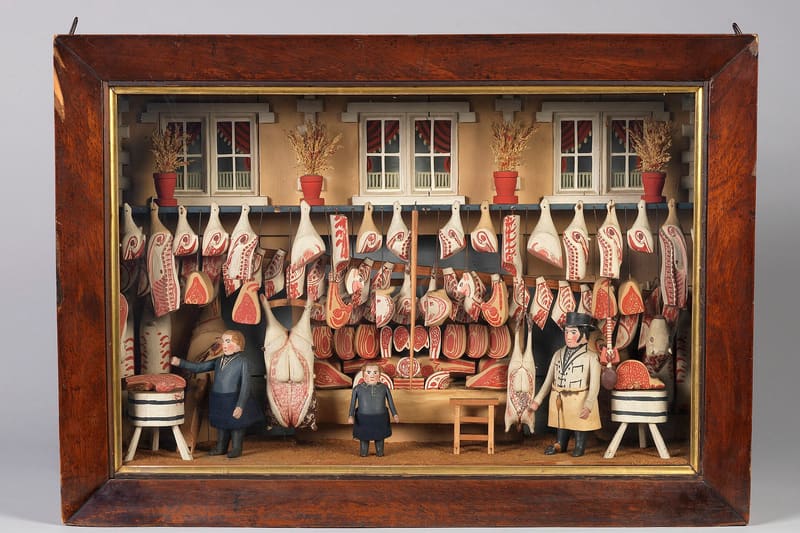
Unknown artist Unknown artist — Public domain — Wikimedia Commons Then: three or four separate specialist food shops on most streets, each with its own counter, its own queue and its own opening hours. Now: consolidated into supermarkets and a smaller number of specialists serving a different, usually higher-priced market. The driver was refrigeration at home plus the car, which together made a weekly shop possible.
-
Number 9: The bank branch
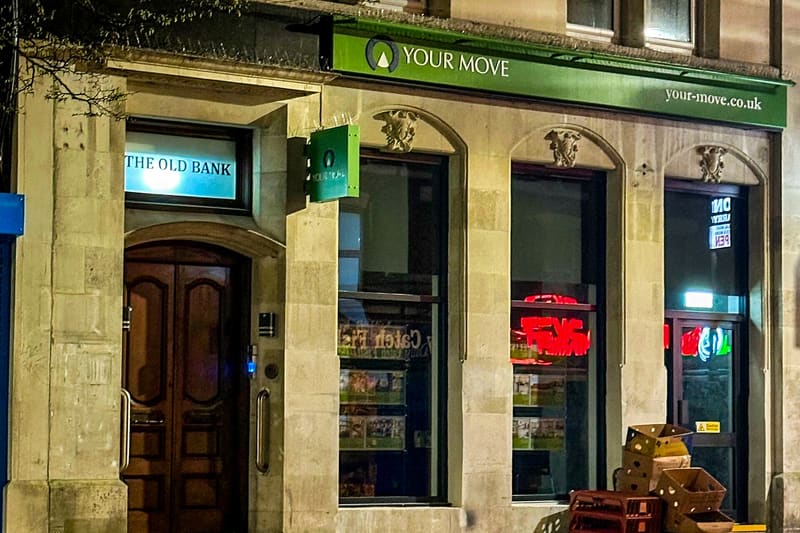
Sunolafjagtenben-hur — CC0 — Wikimedia Commons Then: a substantial building, often the grandest on the street, open banker's hours, with a manager who made lending decisions locally. Now: largely closed. Branch numbers have fallen enormously since the 1990s, driven first by telephone banking, then by the internet.
-
Number 8: The department store
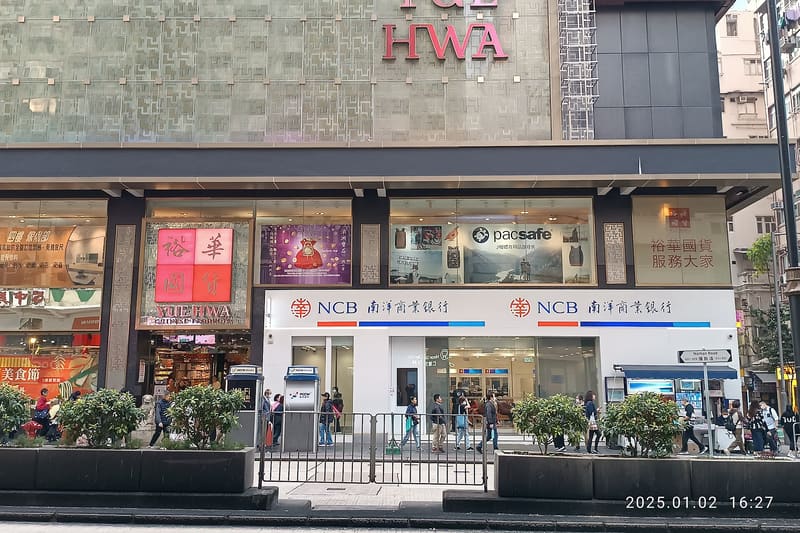
FONO 25 RUOQWM SAXM — CC0 — Wikimedia Commons Then: the anchor of the town, with a restaurant, a haberdashery and a lift attendant. Now: mostly gone or repurposed. Their size was their problem — they occupied huge floorplates funded by a model of shopping that has largely moved online.
-
Number 7: The video shop, which was not there in 1965 either
Illustration: World of Curious Worth including because it is the shortest-lived shop type in high street history: essentially non-existent before 1980, ubiquitous by 1990, extinct by about 2012. A whole retail category with a lifespan of roughly thirty years.
-
Number 6: The shoe repairer
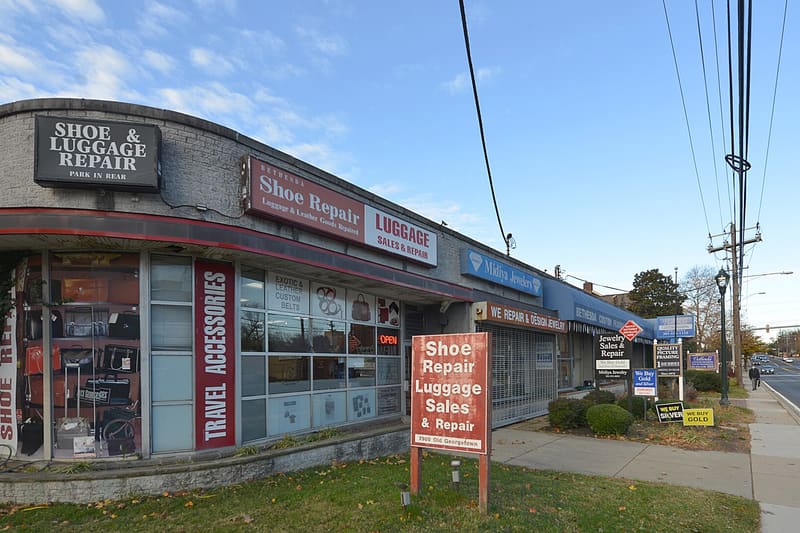
G. Edward Johnson — CC BY 4.0 — Wikimedia Commons Then: several per town, because shoes were expensive relative to income and repair was routine. Now: rare, and usually combined with key cutting and engraving to make the business viable. The change is not fashion; it is the collapse in the price of new shoes.
-
Number 5: The post office
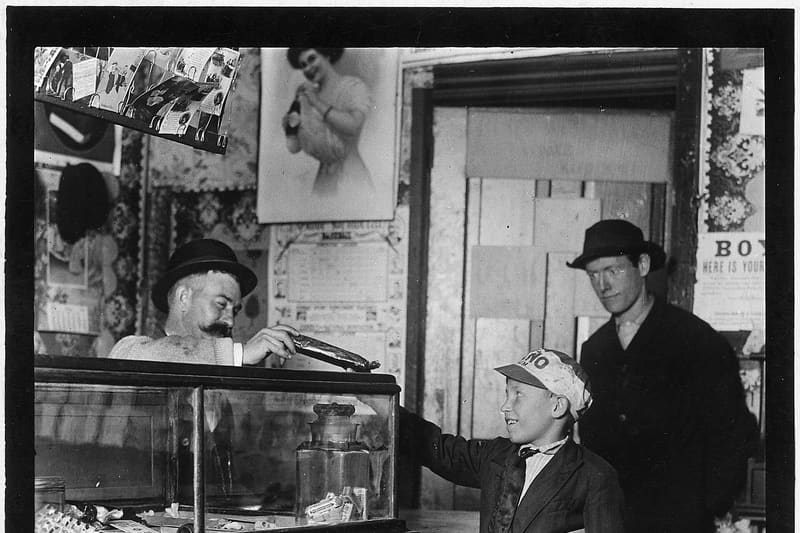
Lewis Hine — Public domain — Wikimedia Commons Then: a standalone branch, often busy enough to have a queue out of the door, handling licences, pensions, savings and parcels. Now: frequently a counter at the back of a convenience store. Paradoxically, parcel volumes have risen sharply with online shopping, while counter services have moved online.
-
Number 4: The pub
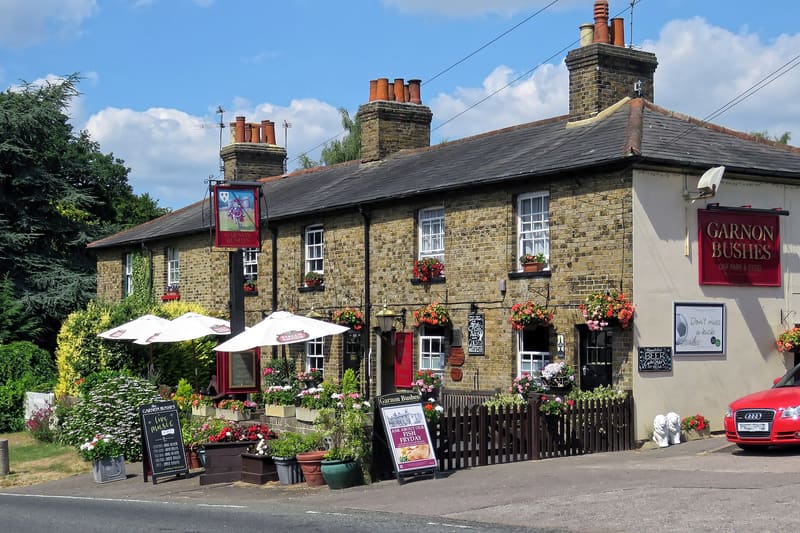
Acabashi — CC BY-SA 4.0 — Wikimedia Commons Then: several per street in a town centre. Now: substantially fewer, with the survivors generally larger, food-led and open all day. The change involved beer duty, drink-driving law, cheaper supermarket alcohol and the smoking ban, in roughly that order over forty years.
-
Number 3: Charity shops
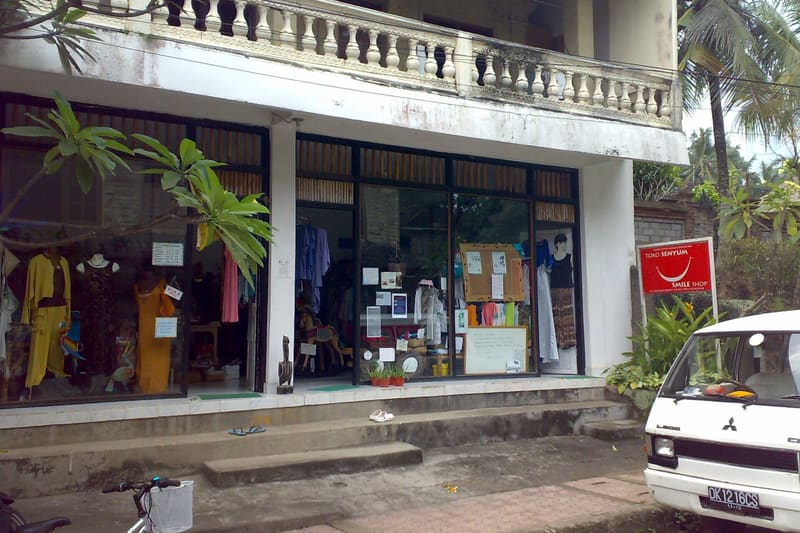
Jack Merridew — Public domain — Wikimedia Commons Then: uncommon. Now: a significant share of units in many town centres. Their growth is partly about mission and partly about economics: business rate relief and volunteer staffing make them viable in units that commercial retail has vacated.
-
Number 2: The coffee shop
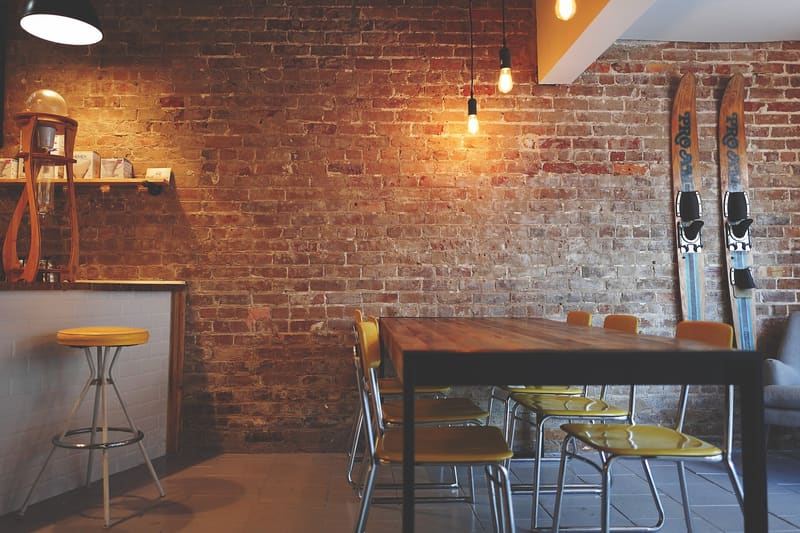
Drew Coffman — CC0 — Wikimedia Commons Then: a tea room or a milk bar, often with table service. Now: a significant and still growing category. This is the clearest example of the high street shifting from goods to services and experiences, which is the general direction of travel.
-
And the strangest one of the lot
Number 1: What the street is actually for
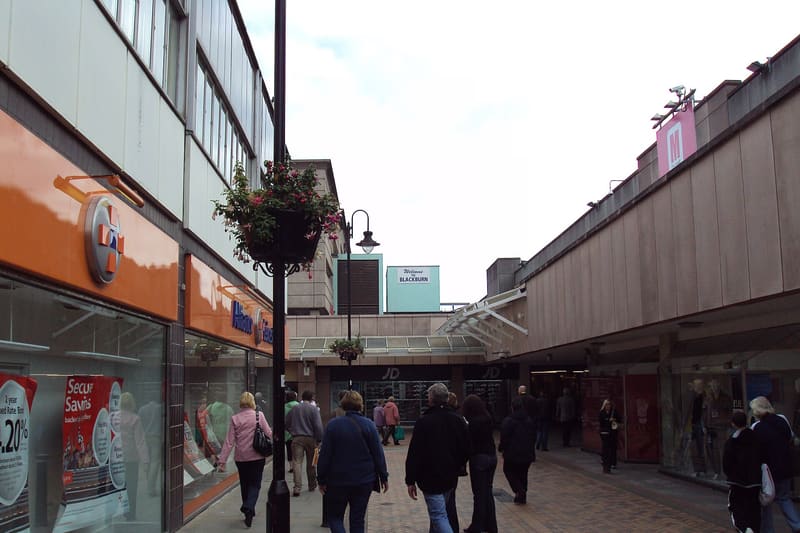
Rept0n1x — CC BY-SA 3.0 — Wikimedia Commons The single biggest change is not any individual shop type. It is that the high street stopped being the place you obtained things and became the place you do things. In 1965 a town centre existed because that was where the goods were; there was no realistic alternative. Today almost every physical good on that street can be delivered to a door, usually cheaper. What cannot be delivered is a haircut, a coffee, a meal, a doctor's appointment, a gym, a pint or a conversation — and those are precisely the categories that have grown. The streets that have struggled most are the ones that tried to compete on goods. The ones doing best are the ones that stopped.


.jpg)
.jpg)


Worth saying plainly: none of this was inevitable, and planning decisions, parking policy and business rates shaped it as much as consumer behaviour did.
Where this came from
- Retail and town centre statistics — Office for National Statistics
- High street and town centre research — Historic England
- History of retailing collections — Museum of London
Read next
 Then & Now
 Ten Brand Changes That Happened So Gradually Nobody Noticed
Packaging, logos and shop fronts rarely change overnight. Ten slow transformations that happened in front of everyone, over decades, without anyone reacting.
 Countdown
 Ten Facts About the Size of Australia That Never Quite Sink In
Australia is mostly a scale problem. Ten comparisons that make the distances legible, including the ones that surprise Australians.
 Then & Now
 Ten Everyday Objects That Changed Shape for a Specific Reason
Plug pins, bottle bases, milk cartons and the humble pencil. Ten familiar objects whose current shape solves a problem you have probably never noticed.