
Wildlife Mysteries Mystery
Seven Animal Behaviours Nobody Can Fully Explain Yet
Genuinely open questions in zoology: whale song, cat purring, magnetic navigation and the mass strandings. What is known, what is guessed, and what is being tested.

There is a persistent impression that biology has finished the basics and is now filling in details. It has not.
Several of the most familiar animal behaviours — ones people watch every day, or hear about constantly — do not have an agreed explanation. That is not a failure. It is what the edge of a field looks like when the subjects are difficult to study.
Seven of them below, counting up to the reason they remain open.
-
Number 7: Why humpback song changes every year
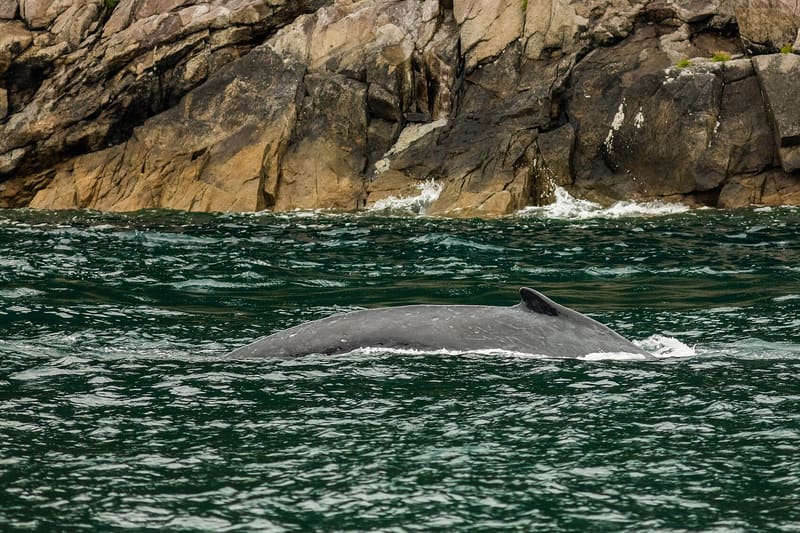
Diego Delso — CC BY-SA 4.0 — Wikimedia Commons Male humpbacks within an ocean population sing broadly the same complex song, and that song changes progressively over a season, with all the singers tracking the change. Occasionally a song from one population spreads to another and replaces it entirely. The function of singing is generally assumed to relate to breeding, but why the song must keep changing, and how the change propagates so fast, is not settled.
-
Number 6: How exactly animals sense magnetic fields

Incnis Mrsi — CC0 — Wikimedia Commons That many species navigate using the Earth's magnetic field is well established by experiment. The receptor doing it is not. Two main candidate mechanisms have been proposed — one involving magnetic mineral particles, one involving light-sensitive proteins in the eye — and the evidence is genuinely unresolved, with different species possibly using different systems.
-
Number 5: Why cetaceans mass strand
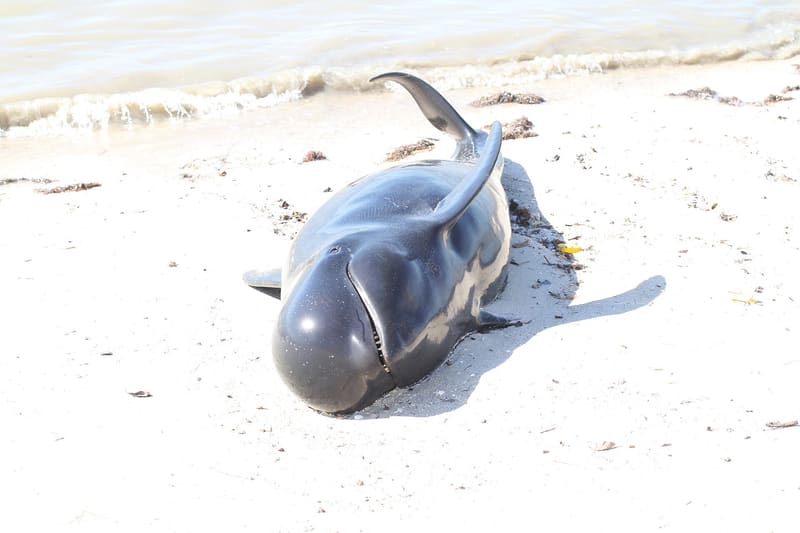
Everglades NPS from Homestead, Florida, United States — Public domain — Wikimedia Commons Groups of whales and dolphins occasionally come ashore together and die. Several contributing factors have been identified in particular cases, including illness in a group leader, unusual seabed topography, and in some documented instances loud human-generated noise. No single explanation covers all events, and investigation is done case by case.
-
Number 4: What purring is for

MichalPL — CC0 — Wikimedia Commons Purring occurs in contentment, in pain, in labour and near death. Hypotheses include self-soothing, communication of a need for care, and a possible role in tissue maintenance. It is a striking example of a behaviour everybody recognises and nobody can fully account for.
-
Number 3: Why some birds engage in anting
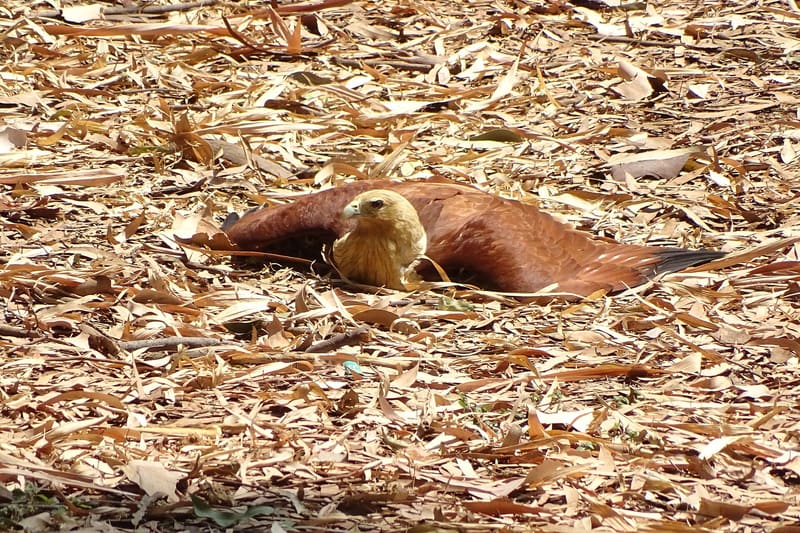
Forestowlet — CC0 — Wikimedia Commons A number of bird species deliberately pick up ants and rub them through their feathers, or sit on an ant nest and allow ants to swarm over them. Suggested explanations include parasite control using formic acid, feather maintenance, and preparing ants for eating. None has been established conclusively.
-
Number 2: How eels navigate to spawn
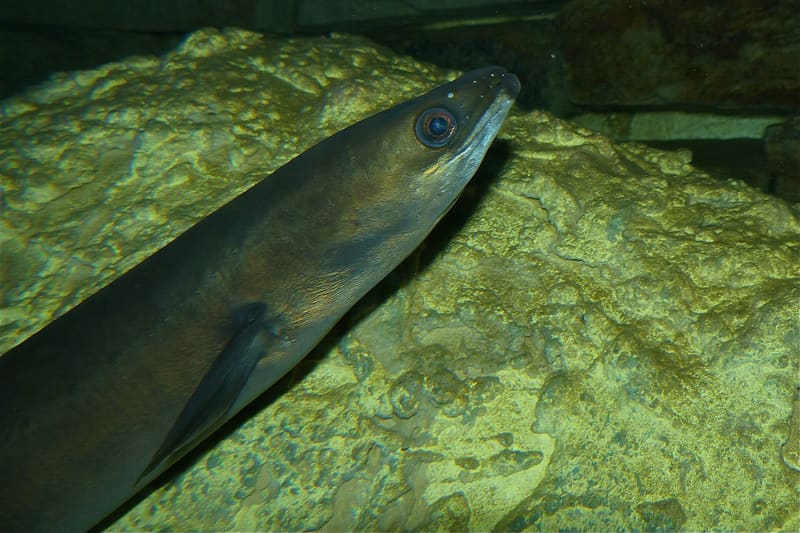
Bernard DUPONT from FRANCE — CC BY-SA 2.0 — Wikimedia Commons European eels are believed to migrate thousands of kilometres to the Sargasso Sea to spawn. Tracking has confirmed part of the journey, but the spawning itself has never been directly observed, and the mechanisms guiding the migration are not fully understood. The species is critically endangered, which makes the research both harder and more urgent.
-
And the strangest one of the lot
Number 1: Why so many questions stay open

Illustration: World of Curious It is worth being clear about why zoology has so many unresolved basics, because it is not a lack of interest. The subjects are mobile, long-lived, often live in environments where observation is extremely difficult, and cannot be experimented on freely for good ethical reasons. A humpback song study may need decades of recordings from multiple ocean basins. An eel spawning study requires finding an event nobody has ever seen. A magnetoreception study requires locating a receptor that may be a handful of cells. These are not soft questions being neglected; they are hard questions with severe practical constraints, and most of the recent progress has come from technology — cheaper tags, better acoustics, genetic analysis — rather than from new ideas.


,_Bah%C3%ADa_de_la_Resurecci%C3%B3n,_Seward,_Alaska,_Estados_Unidos,_2017-08-21,_DD_39.jpg)

.jpg)
,_Kuyavian-Pomeranian_Voivodeship,_Poland,_July_2025.jpg)

_(13532974394).jpg)
The honest position on all seven is the same: there are good hypotheses, partial evidence, and no settled answer. That is what an open question looks like.
Where this came from
- Whale song and cetacean research — Woods Hole Oceanographic Institution
- Animal navigation and magnetoreception research — Royal Society
- Marine mammal strandings investigation — Natural History Museum
Read next
 Feature
 Eight Animals That Travelled Extraordinary Distances, With the Evidence
Tracked migrations, ringed birds and tagged sharks. Eight remarkable animal journeys that were actually measured, plus a famous one that was not.
 Myth or Fact
 Nine Things Cats Do, and What the Research Actually Says
Purring, kneading, slow blinking and the noise aimed only at humans. Nine cat behaviours, separated honestly into the well evidenced and the still uncertain.
 Countdown
 Nine Animals That Use Tools, and How We Actually Know
Tool use in animals is often overstated. Nine cases with genuine experimental or field evidence, and a note on what each study did and did not show.