
Cats Myth or Fact
Nine Things Cats Do, and What the Research Actually Says
Purring, kneading, slow blinking and the noise aimed only at humans. Nine cat behaviours, separated honestly into the well evidenced and the still uncertain.

Cats attract enormous confidence and comparatively little data. Almost everything you read about what a cat is thinking is inference, and some of it is inference dressed as fact.
Where good research exists, it is genuinely interesting — and it points in a consistent direction: several of the behaviours we find most characteristic of cats appear to have developed specifically in the context of living with people.
Nine of them below, labelled honestly.
-
Number 9: WELL EVIDENCED — The solicitation purr is aimed at people

Asabae2752 — CC0 — Wikimedia Commons Cats produce a modified purr when seeking food that contains a higher-frequency component, acoustically similar to a cry, embedded within the normal purr. People rate it as more urgent and harder to ignore, including people who do not own cats. It is one of the clearest examples of a cat behaviour shaped specifically by living with humans.
-
Number 8: WELL EVIDENCED — Adult cats rarely meow at each other
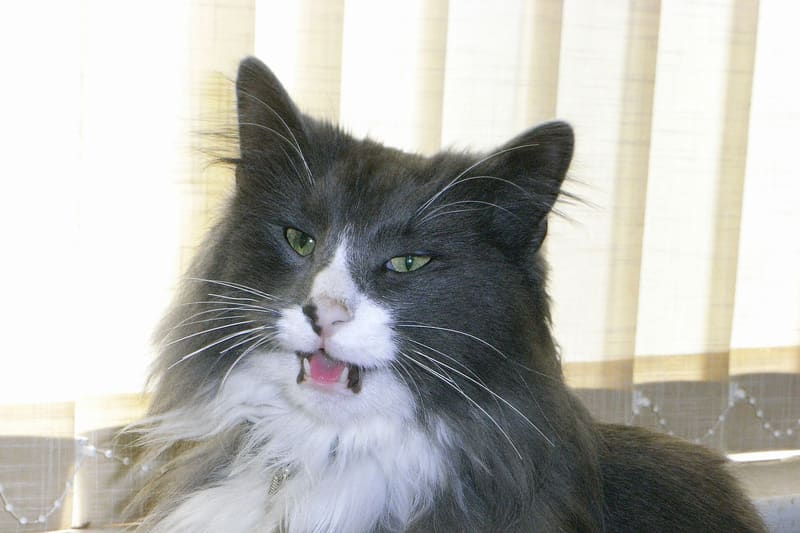
Piffle free wallpapers — CC BY-SA 3.0 — Wikimedia Commons Meowing is common between kittens and mothers, and between cats and humans, but comparatively rare between adult cats. The working interpretation is that it is largely retained and directed at us rather than being general cat communication.
-
Number 7: REASONABLY SUPPORTED — Slow blinking is a friendly signal
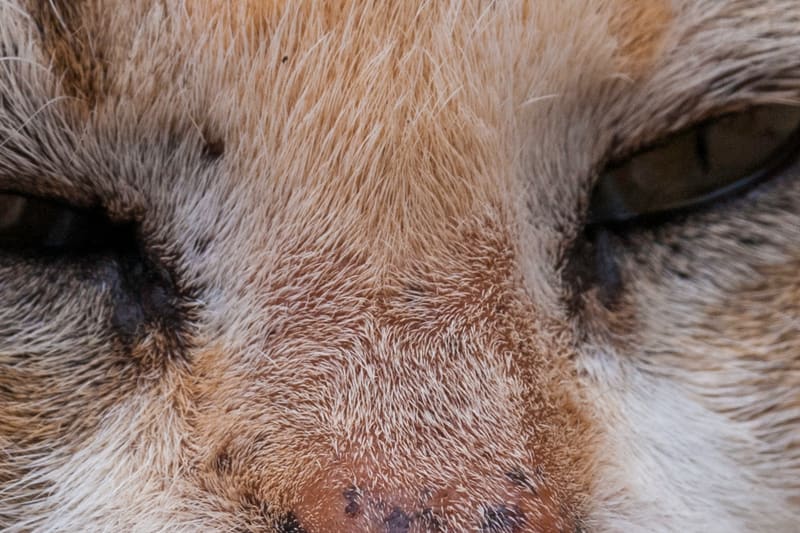
Wilfredor — CC0 — Wikimedia Commons Studies have found that cats are more likely to slow-blink back at a person who slow-blinks at them, and more likely to approach a stranger who has done so. It is a relatively small body of work but the results have been consistent.
-
Number 6: UNCERTAIN — Purring means contentment
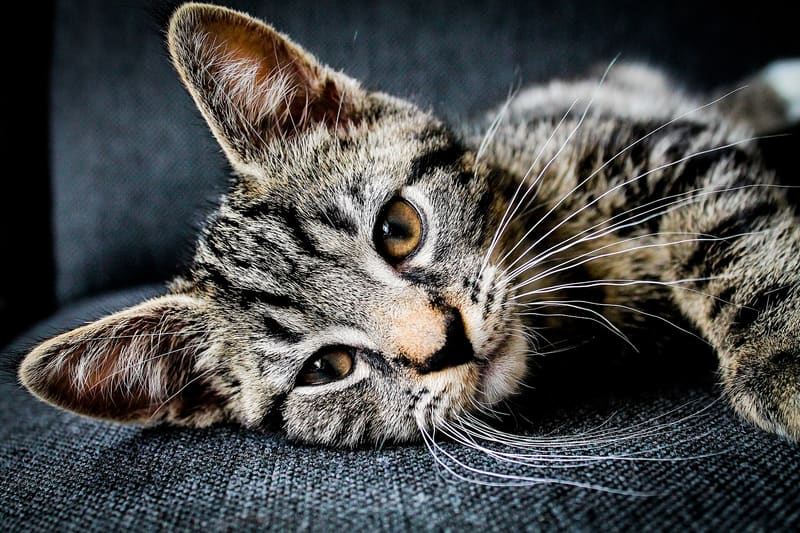
Erik-Jan Leusink ejleusink — CC0 — Wikimedia Commons Cats purr when content and also when injured, frightened, giving birth and near death. Explanations range from a self-soothing mechanism to a general signal of a need for care. What is clear is that purring alone is not a reliable indicator of a happy cat.
-
Number 5: REASONABLY SUPPORTED — Kneading is retained from kittenhood
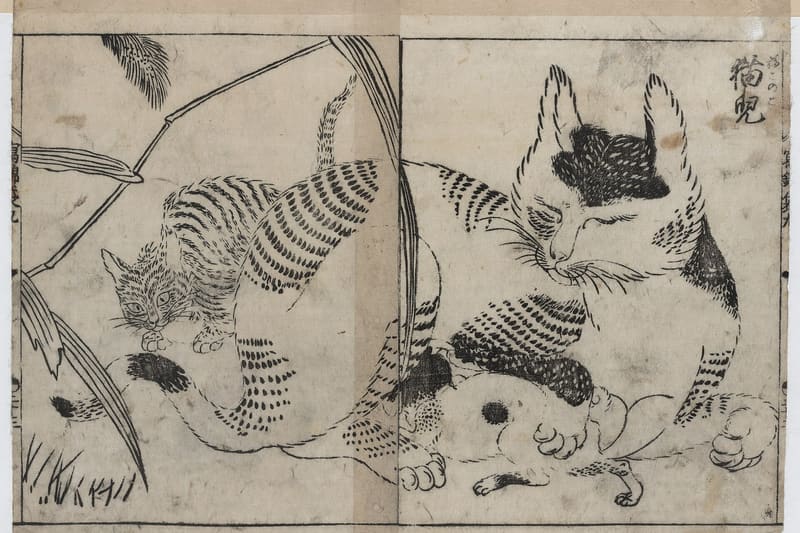
Tachibana, Morikuni, 1679-1748, artist — Public domain — Wikimedia Commons The rhythmic pressing motion is the same one kittens use while nursing to stimulate milk flow. Its persistence into adulthood is generally read as a comfort behaviour, although the evidence is more observational than experimental.
-
Number 4: WELL EVIDENCED — Cats recognise their own name
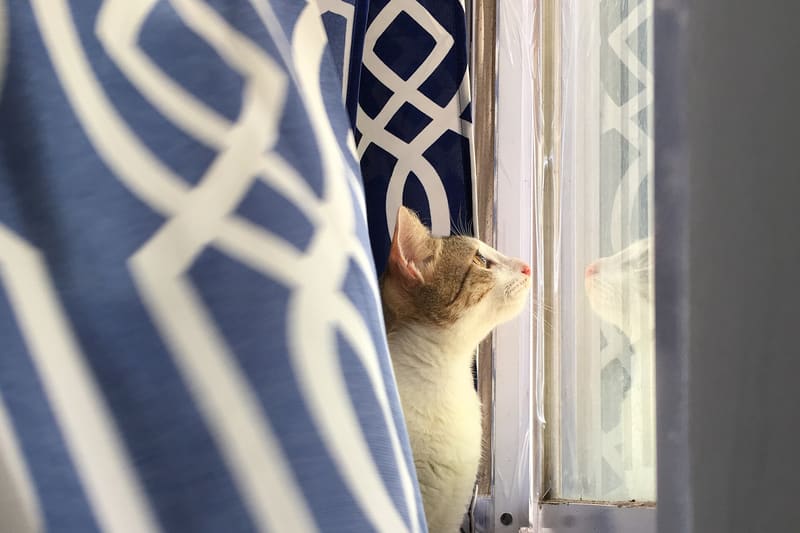
Acagastya — CC0 — Wikimedia Commons Research has shown that cats respond differently to their own name than to similar-sounding words, even when spoken by an unfamiliar person. Responding is a different matter entirely, as owners will confirm.
-
Number 3: WELL EVIDENCED — Coat colour genetics explain tortoiseshells
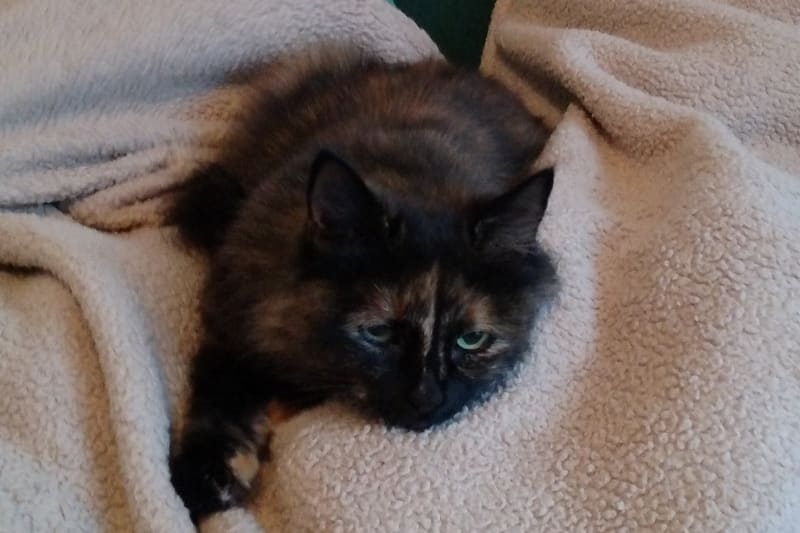
AmeteurAngeleno — CC0 — Wikimedia Commons The genes for orange and black coat colour sit on the X chromosome. A cat with two X chromosomes can express both, producing tortoiseshell and calico patterns; a cat with one usually cannot. That is why the overwhelming majority of tortoiseshells are female, and why the rare males typically have an unusual chromosome arrangement.
-
Number 2: UNCERTAIN — Bringing prey home is a teaching behaviour
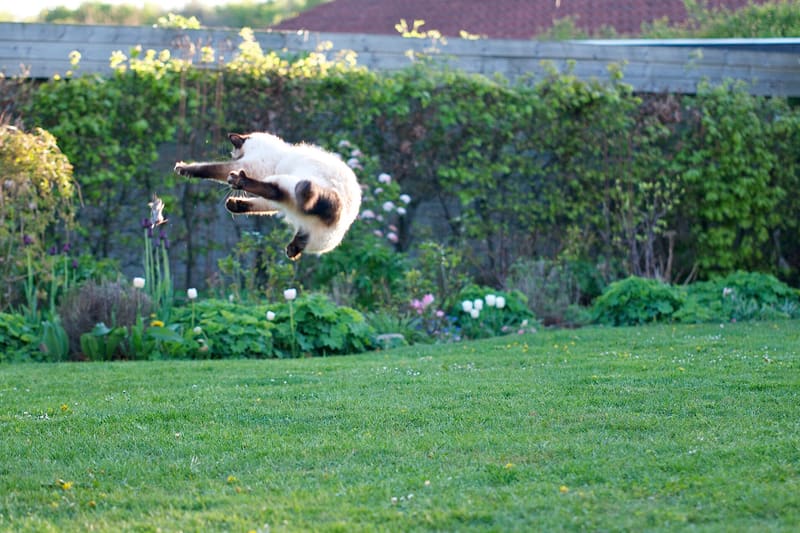
Niels Hartvig — CC BY-SA 2.0 — Wikimedia Commons Widely repeated and poorly evidenced. Bringing prey to a secure location before eating is normal feline behaviour, and the home is the secure location. The teaching interpretation is plausible but not established.
-
And the strangest one of the lot
Number 1: THE BIGGEST GAP — We simply know far less about cats than dogs

Creator unknown — Public domain — Wikimedia Commons This is the honest headline. Dogs have been studied intensively for decades in controlled settings, partly because they are cooperative subjects and partly because of interest in working roles. Cats are considerably harder to test: they do not reliably perform in unfamiliar environments, they are less motivated by experimenter-controlled rewards, and many studies have small samples as a result. A great deal of confident writing about what cats think is therefore extrapolation. That is not an argument that cats are unknowable. It is a reason to treat strong claims about feline emotion with more caution than the equivalent claims about dogs.


.jpg)


.jpg)

The interesting pattern across the well-evidenced items is how many of them are about us. A lot of what cats do is aimed squarely at humans.
Editor's note: General interest writing about behaviour, not veterinary advice. Purring can indicate contentment or stress, so a change in your cat's behaviour is worth a vet's opinion rather than an internet one.
Where this came from
- Domestic cat behaviour research — Royal Veterinary College
- Cat domestication and genetics — Natural History Museum
- Animal behaviour reference — Encyclopaedia Britannica
Read next
 Countdown
 Nine Animals That Use Tools, and How We Actually Know
Tool use in animals is often overstated. Nine cases with genuine experimental or field evidence, and a note on what each study did and did not show.
 Feature
 Eight Animals That Travelled Extraordinary Distances, With the Evidence
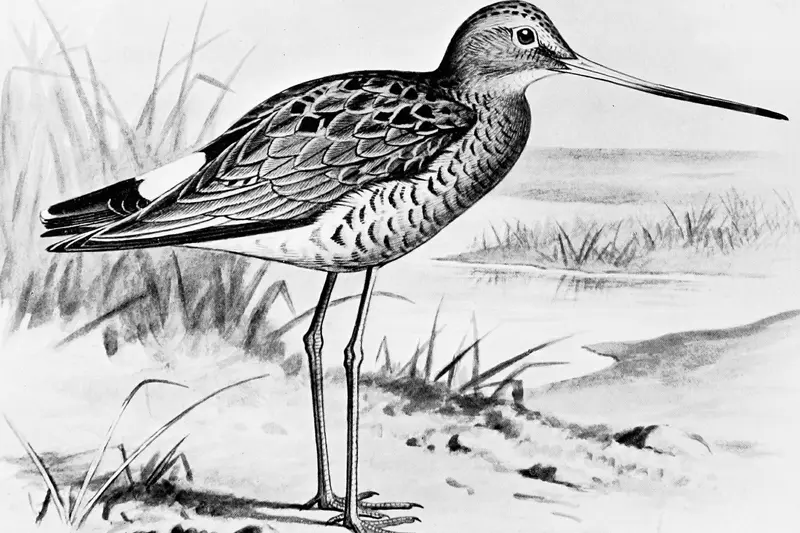
Tracked migrations, ringed birds and tagged sharks. Eight remarkable animal journeys that were actually measured, plus a famous one that was not.
 Mystery
 Seven Animal Behaviours Nobody Can Fully Explain Yet
Genuinely open questions in zoology: whale song, cat purring, magnetic navigation and the mass strandings. What is known, what is guessed, and what is being tested.