
Animal Intelligence Countdown
Nine Animals That Use Tools, and How We Actually Know
Tool use in animals is often overstated. Nine cases with genuine experimental or field evidence, and a note on what each study did and did not show.
Animal intelligence is the area where popular writing is loosest, because every study gets flattened into a claim about how clever something is.
The research is more careful, and more interesting. What is being tested is usually a specific ability: can this animal plan for a future need, can it understand cause and effect, can it invent a solution it has never seen.
Nine cases below, with a note on what the evidence actually consists of.
-
Number 9: Sea otters and anvil stones
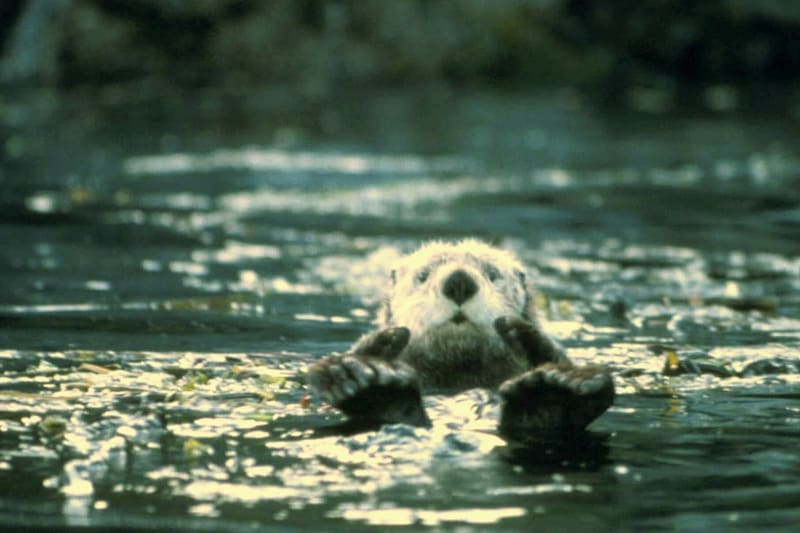
David Menke — Public domain — Wikimedia Commons Otters carry a stone, often keeping a favoured one in a pouch of loose skin, and use it to break open shellfish while floating on their backs. Field observation is extensive, and individual otters show consistent preferences for particular stones.
-
Number 8: Chimpanzees and termite fishing
Illustration: World of Curious The classic case, documented in the wild from the 1960s onwards. Chimpanzees select a stick, modify it by stripping leaves, insert it into a termite mound and eat what climbs on. Different populations use measurably different techniques, which is one of the standard arguments for culture in non-human animals.
-
Number 7: Elephants and branch fly-swatters
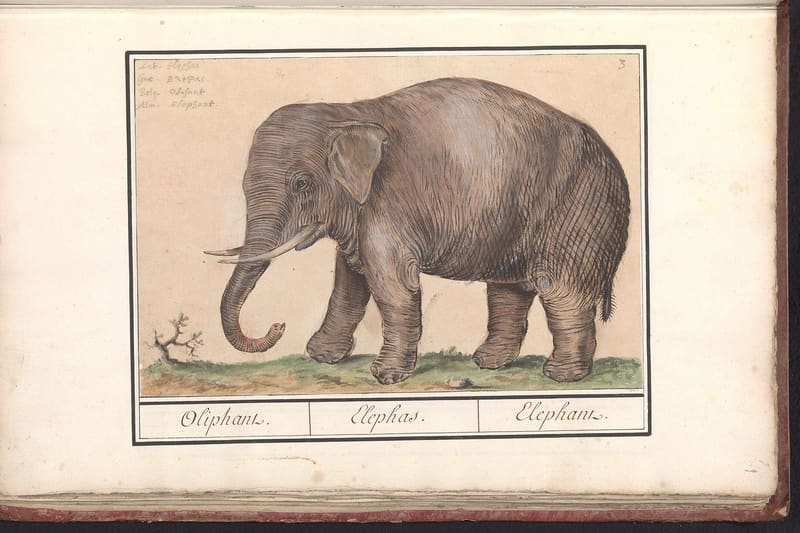
Rijksmuseum — CC0 — Wikimedia Commons Elephants have been observed breaking branches to a workable length and using them to swat flies, with studies finding that modified branches were more effective than unmodified ones. The modification step is what makes this stronger evidence than simply picking something up.
-
Number 6: Egyptian vultures and stones
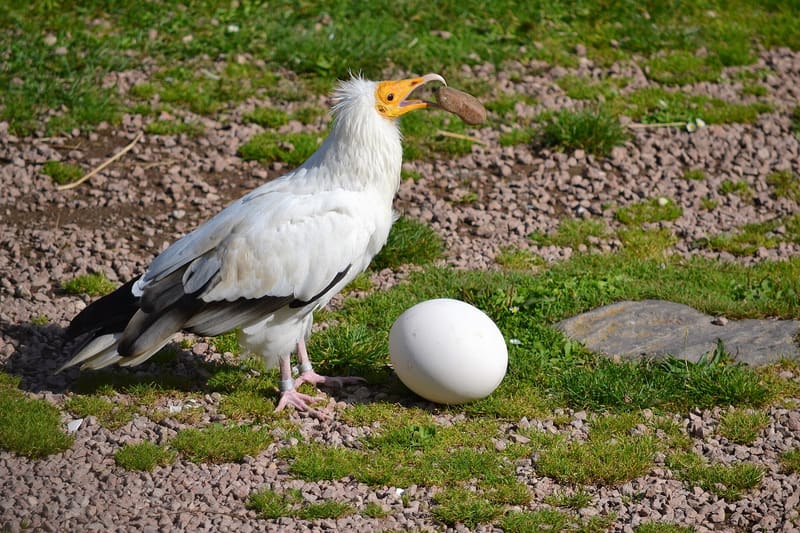
Tim Strater from Rotterdam, Nederland — CC BY-SA 2.0 — Wikimedia Commons Vultures have been recorded picking up stones and throwing them at large eggs to break the shell. It is one of the earlier documented cases of tool use in birds and has been observed repeatedly in the field.
-
Number 5: Octopuses and coconut shells
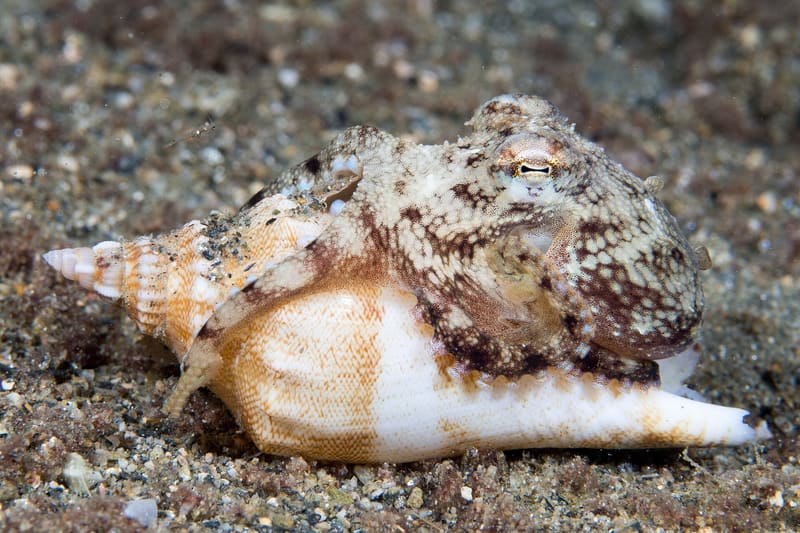
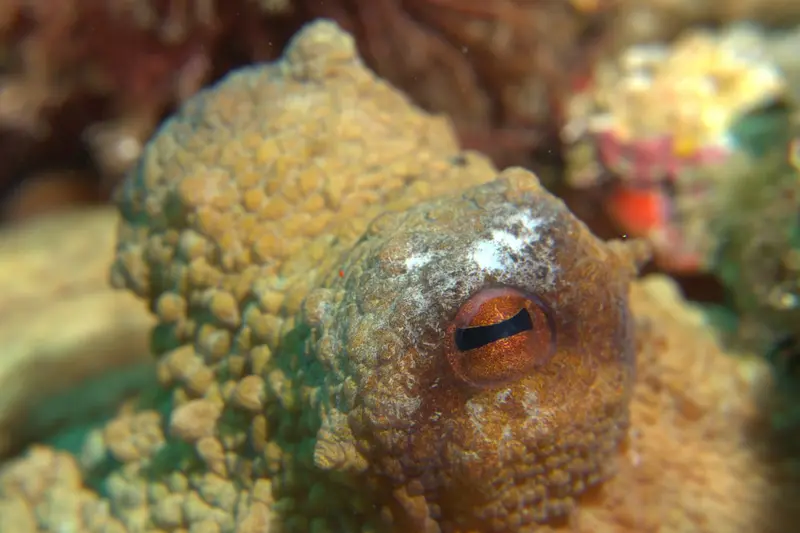
Rickard Zerpe — CC BY 2.0 — Wikimedia Commons Octopuses have been filmed collecting discarded coconut shell halves, carrying them awkwardly across the seabed, and later assembling them into a shelter. Carrying an object for future use is a stronger claim than using something found in place, which is why this observation attracted attention.
-
Number 4: Dolphins and sponges

NASA — Public domain — Wikimedia Commons In Shark Bay in Western Australia, some dolphins carry marine sponges on their beaks while foraging on the seabed, apparently as protection. The behaviour is passed down within family lines, largely from mother to daughter, and has been tracked across generations.
-
Number 3: Capuchin monkeys and stone hammers
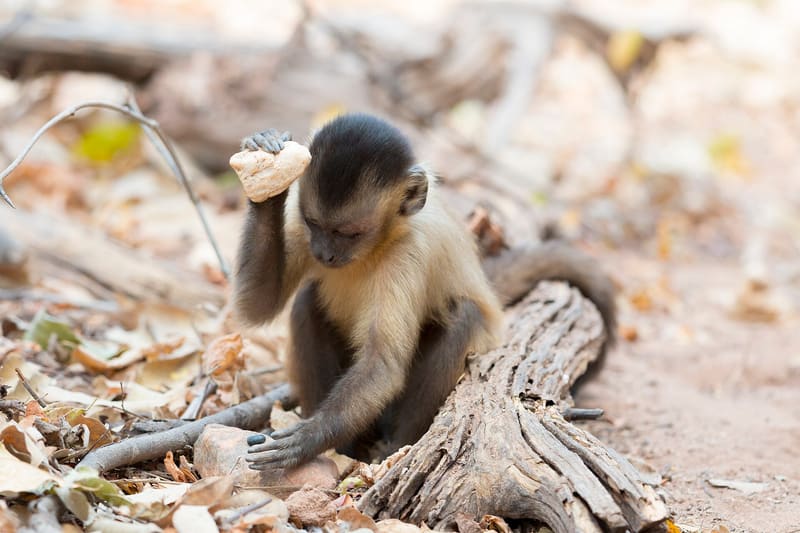
Tiago Falótico — CC BY-SA 4.0 — Wikimedia Commons Wild capuchins use heavy stones to crack nuts placed on a flat anvil stone, selecting appropriately sized hammers. Archaeological work at some sites has identified stone tools used by capuchins going back centuries.
-
Number 2: New Caledonian crows and hooks
Illustration: World of Curious These crows manufacture hooked tools from twigs in the wild. In laboratory work, an individual crow bent a straight piece of wire into a hook to retrieve food from a tube, without demonstration. Follow-up research has examined how much of the ability is inherited and how much is learned, and the answer appears to be both.
-
And the strangest one of the lot
Number 1: What counts as a tool, and why it matters
Illustration: World of Curious This is the part that is usually left out. The standard definition requires an animal to use an external object to alter the state of another object or organism, which excludes a bird dropping a shell onto rocks, since the rocks are not being wielded. Stricter definitions require the object to be held and, for the strongest claims, modified or manufactured. The distinction matters because the popular version of these stories collapses them all into animals are clever, while the research is asking a much more specific question: what kind of cognition is needed to solve this particular problem? In several cases the answer has turned out to be less than the headlines suggested, and in a few — the crows in particular — considerably more.


_Oliphant._Elephas._Elephant._(titel_op_object),_RP-T-BR-2017-1-2-9.jpg)
.jpg)
_(45031078485).jpg)


The interesting finding across all of this is how widely scattered tool use is. It has appeared independently in primates, birds, cetaceans and cephalopods, which have almost nothing in common.
Where this came from
- Animal cognition research overviews — University of Cambridge
- Primate and corvid behaviour collections — Natural History Museum
- Animal behaviour reference — Encyclopaedia Britannica
Read next
 Countdown
 Ten Facts About the Platypus That Sound Invented
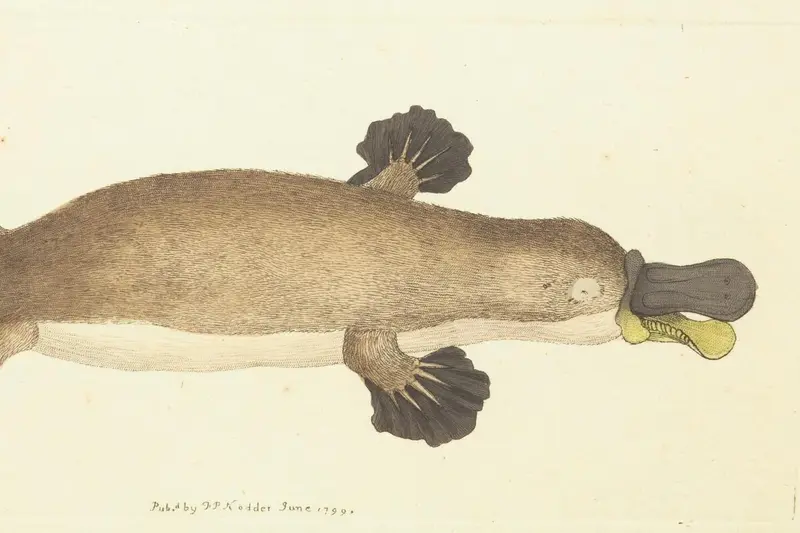
Venomous, electroreceptive, egg-laying and without a stomach. Ten documented facts about an animal that European scientists initially assumed was a hoax.
 Countdown
 Ten Animal Facts That Sound Completely Invented
Ten documented pieces of animal biology and behaviour that read like a wind-up, with the sources attached and the shaky ones left out.
 Myth or Fact
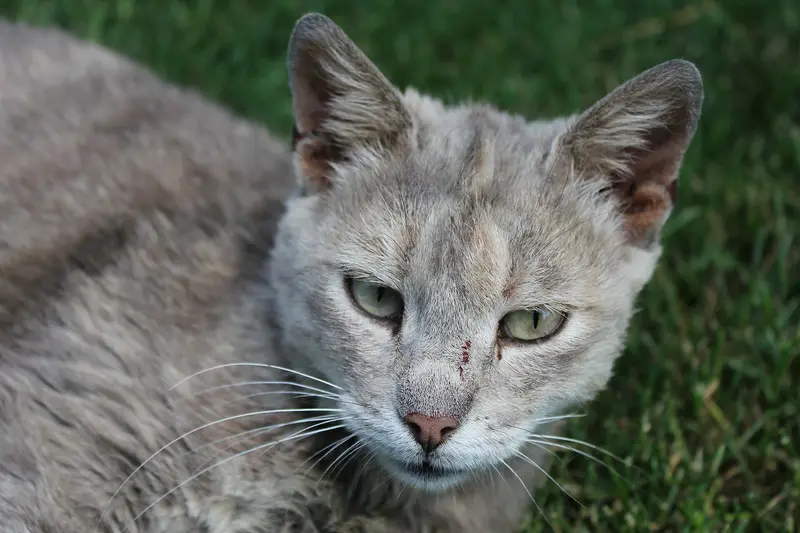
 Nine Things Cats Do, and What the Research Actually Says
Purring, kneading, slow blinking and the noise aimed only at humans. Nine cat behaviours, separated honestly into the well evidenced and the still uncertain.