
Australian Wildlife Countdown
Ten Facts About the Platypus That Sound Invented
Venomous, electroreceptive, egg-laying and without a stomach. Ten documented facts about an animal that European scientists initially assumed was a hoax.

The platypus is the animal most often used to argue that nature has a sense of humour, which is unfair to both parties. It is a well-adapted riverine predator from a very old mammalian lineage, and every one of its oddities does a job.
What makes it so startling is that it combines features from categories we treat as mutually exclusive: it lays eggs, produces milk, has fur, has venom, and navigates electrically.
Ten of them, counting up to the reaction it caused when it first reached Europe.
-
Number 10: It lays eggs, and it is a mammal
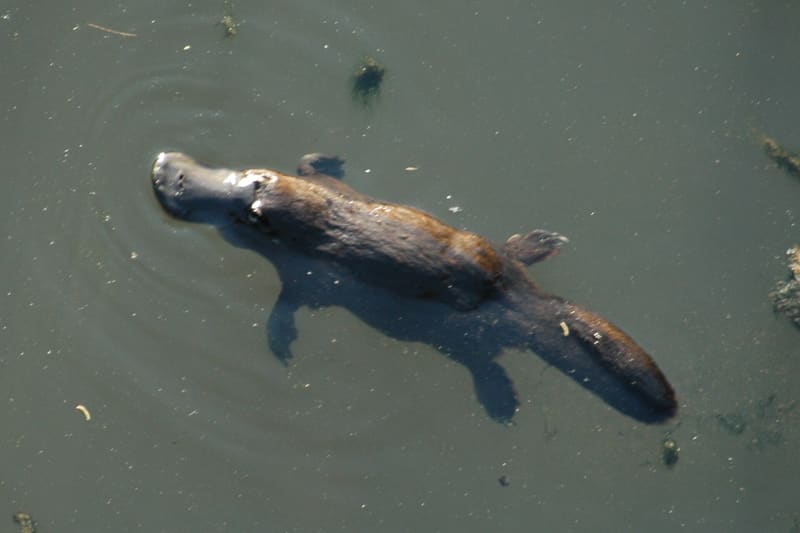
Peter Scheunis — CC BY 1.0 — Wikimedia Commons Platypuses and echidnas are monotremes, the only surviving mammals that lay eggs rather than giving birth to live young. The eggs are small and leathery, and are incubated for around ten days.
-
Number 9: It has no nipples
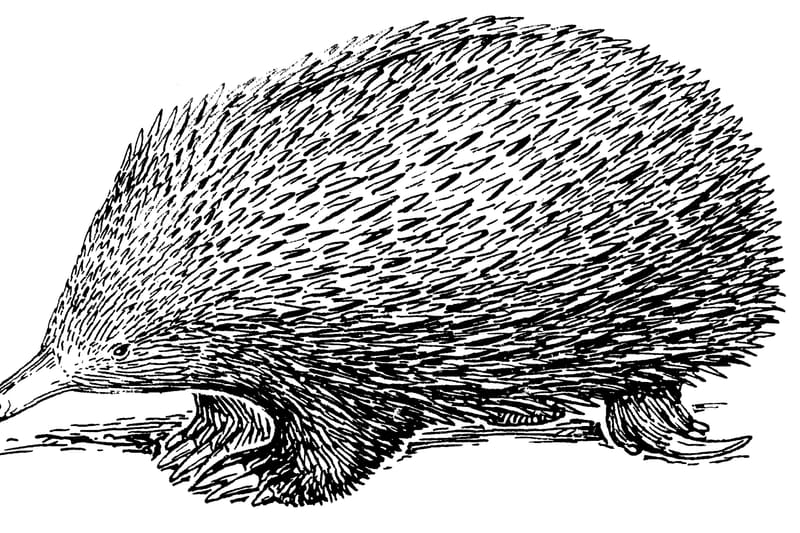
Pearson Scott Foresman — Public domain — Wikimedia Commons Milk is secreted through patches of skin on the mother's abdomen and the young lap it from the fur. Mammary glands without nipples are one of several features that place monotremes at an unusual position in mammalian evolution.
-
Number 8: The males are venomous
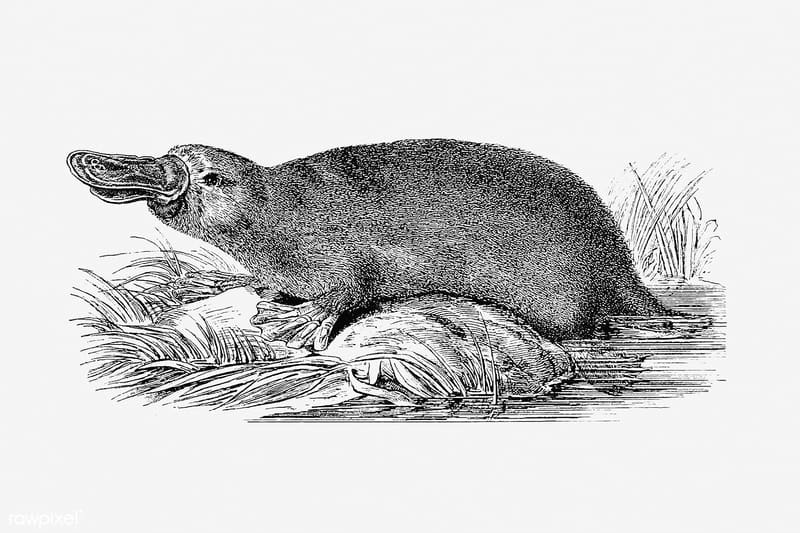
Rawpixel Ltd — CC BY 2.0 — Wikimedia Commons Male platypuses have a spur on each hind leg connected to a venom gland. The venom is not considered lethal to humans but is reported to cause severe, long-lasting pain that responds poorly to conventional painkillers. Venom production increases during the breeding season, which suggests it is used in competition between males.
-
Number 7: It hunts with its eyes, ears and nose shut
Illustration: World of Curious When diving, a platypus closes its eyes, ears and nostrils. It locates prey entirely through its bill, which detects both touch and the faint electrical fields produced by the muscle activity of its prey.
-
Number 6: Electroreception is extremely rare in mammals
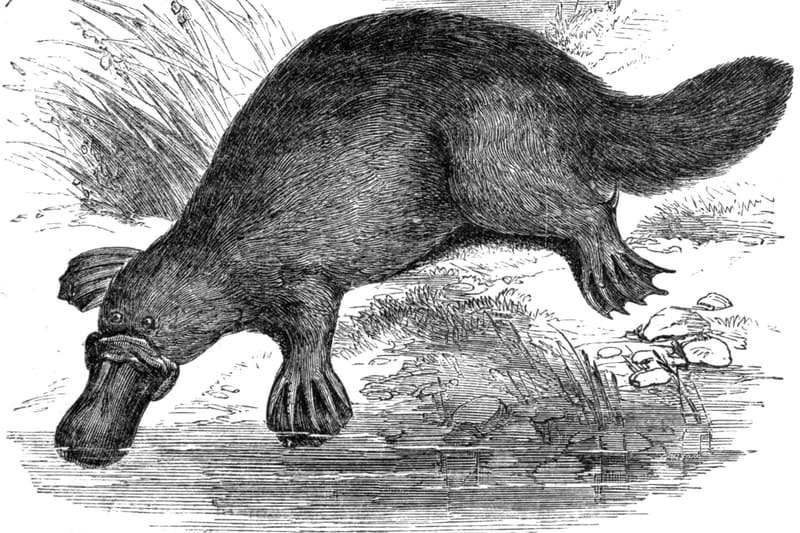
Samuel Sidney — Public domain — Wikimedia Commons The ability to sense electrical fields is widespread in fish and amphibians but very unusual among mammals. The platypus bill contains many thousands of electroreceptors and mechanoreceptors, which together build a picture of the riverbed in complete darkness.
-
Number 5: It has no stomach
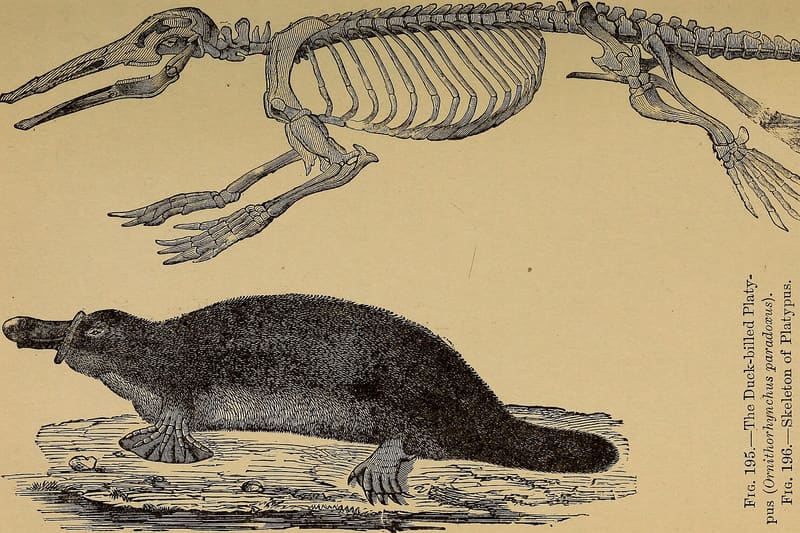
Haeckel, Ernst, 1834-1919 — No restrictions — Wikimedia Commons The oesophagus connects more or less directly to the intestine, with no acid-producing stomach in between. Stomach loss has occurred independently in several groups of animals, and is generally associated with diets that do not require strong acid digestion.
-
Number 4: It stores food in cheek pouches

Illustration: World of Curious A platypus collects prey on a dive, stores it in pouches in its cheeks, and then surfaces to grind it up. Adults have no teeth: they use rough pads and grit picked up from the riverbed.
-
Number 3: It glows under ultraviolet light
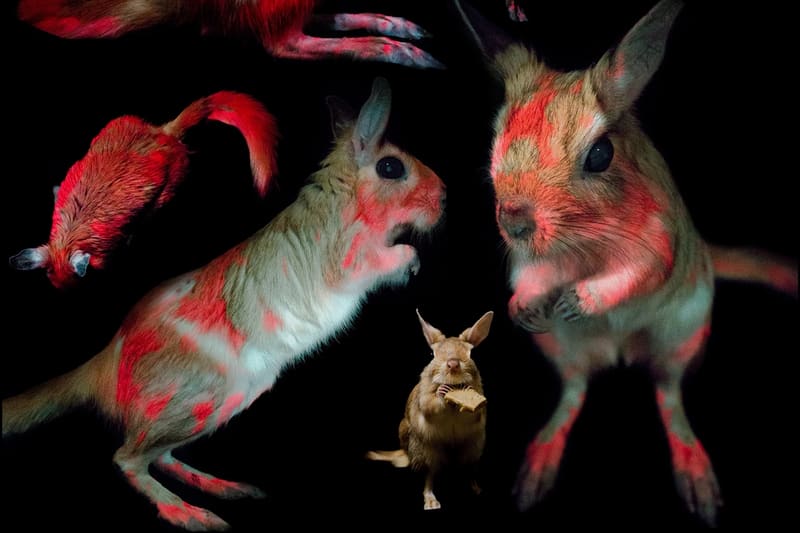
Olson, E.R., Carlson, M.R., Ramanujam, V.M.S. et al. (2021) — CC BY 4.0 — Wikimedia Commons A study published in 2020 reported that platypus fur fluoresces under ultraviolet light. Biofluorescence has since been reported in a number of mammals. What it is for, or whether it serves any function at all, is not established.
-
Number 2: It has an unusual number of sex chromosomes

Creator unknown — Public domain — Wikimedia Commons Rather than the familiar pair, platypuses have ten sex chromosomes arranged in a chain. The genetic system shows similarities to birds as well as to mammals, which is one of the reasons the genome has been studied so closely.
-
And the strangest one of the lot
Number 1: European scientists thought the first specimen was a fake
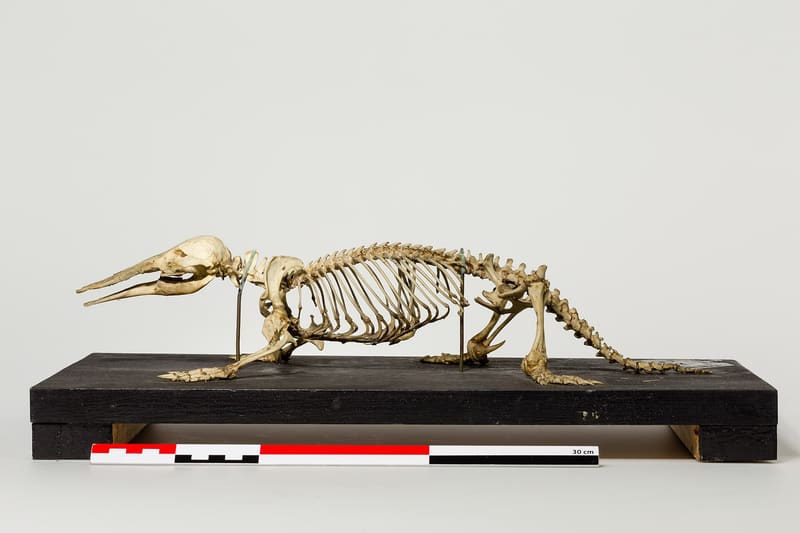
Édouard Hue Pymouss — CC BY-SA 4.0 — Wikimedia Commons When a preserved platypus reached Britain at the end of the eighteenth century, the reaction of several naturalists was that it had been assembled from parts. The suspicion was reasonable rather than foolish: the trade in composite fake specimens was real and well known, and the animal combined a duck-like bill with a mammalian body in a way that matched no known group. Careful examination found no stitching, and the specimen held at the Natural History Museum is reported to still show marks where someone checked for it. It took decades and considerable argument before egg-laying in monotremes was confirmed by European science, which it was in 1884 — knowledge that Aboriginal Australians had held for a very long time already.


.png)
.jpg)

_(14595152187).jpg)


.jpg)
The platypus is the standard example used to explain that evolution has no plan. It is a genuinely old lineage doing something that worked.
Where this came from
- Platypus biology and conservation — Australian Museum
- Monotreme research and collections — Natural History Museum
- Australian wildlife reference — Encyclopaedia Britannica
Read next
 Countdown
 Ten Animal Facts That Sound Completely Invented
Ten documented pieces of animal biology and behaviour that read like a wind-up, with the sources attached and the shaky ones left out.
 Countdown
 Ten Animals You Have Almost Certainly Never Heard Of
Small, strange and rarely photographed species that never make the documentaries, plus the reason the same few animals always do.
 Countdown
 Nine Deep-Sea Creatures That Barely Look Real
The deep ocean is the largest habitat on Earth and the least visited. Nine of its residents, and the specific problem each one has evolved to solve.