
Ocean Weirdness Countdown
Nine Deep-Sea Creatures That Barely Look Real
The deep ocean is the largest habitat on Earth and the least visited. Nine of its residents, and the specific problem each one has evolved to solve.

The deep sea is the largest living space on the planet by a very wide margin, and the least explored. Below about a thousand metres there is no sunlight at all, the pressure is crushing, and food arrives mainly as a slow drift of material falling from above.
Everything on this list is a solution to that set of conditions. The shapes look absurd because the problems are unfamiliar, not because evolution got distracted.
Nine of them, counting up to the one that is hardest to classify.
-
Number 9: The barreleye, with a transparent head
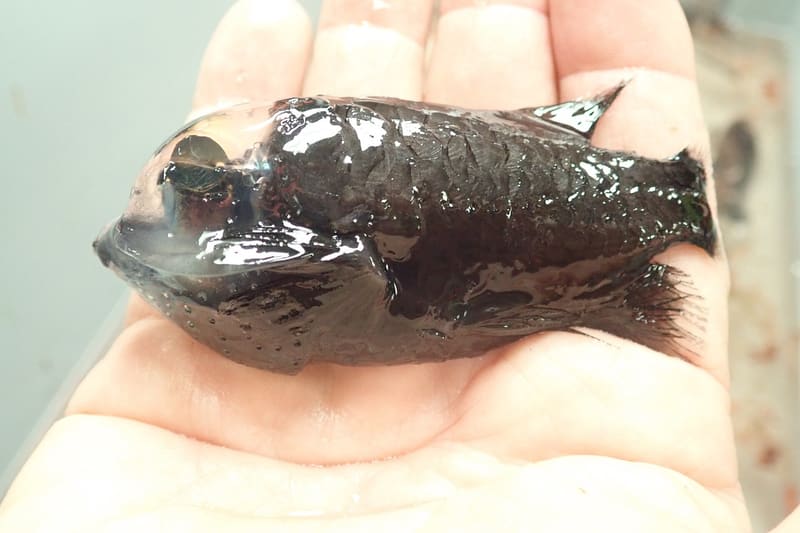
Creator unknown — Public domain — Wikimedia Commons Its eyes are tubular, point upwards through a clear dome on the top of its head, and can rotate forwards. It spends its time looking up for silhouettes against the faint light from above, then swivels its eyes to track what it is eating.
-
Number 8: The anglerfish, with a fishing rod made of skin
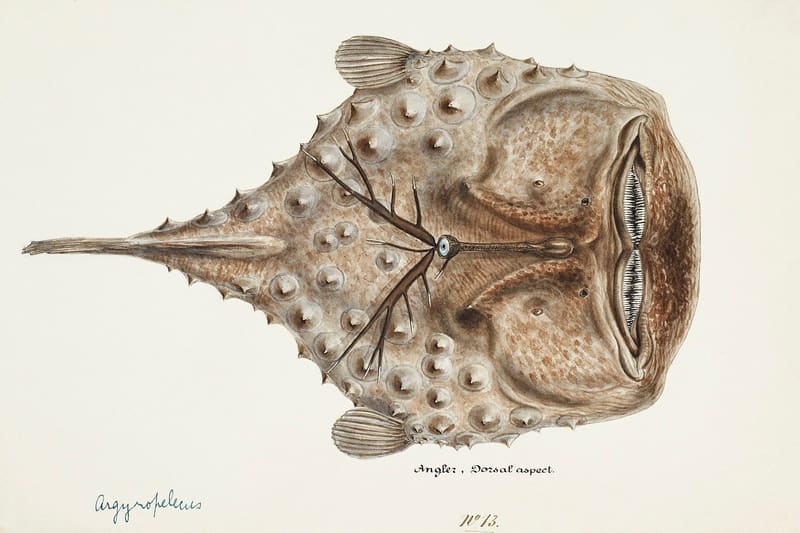
Rawpixel — Public domain — Wikimedia Commons A modified spine on the head carries a lure containing bioluminescent bacteria. In several species the much smaller male fuses permanently to the female, sharing her circulation and eventually losing most of his own body.
-
Number 7: The gulper eel, which is mostly mouth
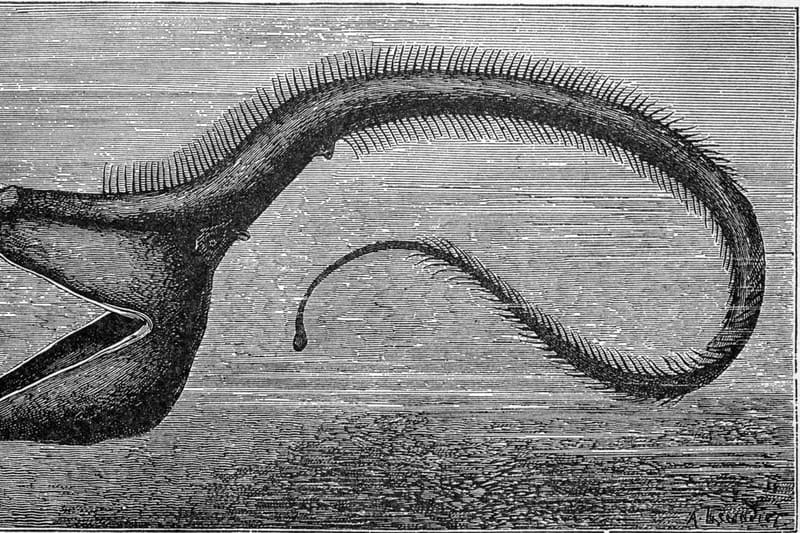
Holder, Charles Frederick, 1851-1915 — Public domain — Wikimedia Commons A hinged jaw far larger than its body, attached to a thin whip of a tail with a light organ on the end. In an environment where meals are rare, the strategy is to be able to swallow almost anything that comes past.
-
Number 6: The vampire squid, which eats falling debris
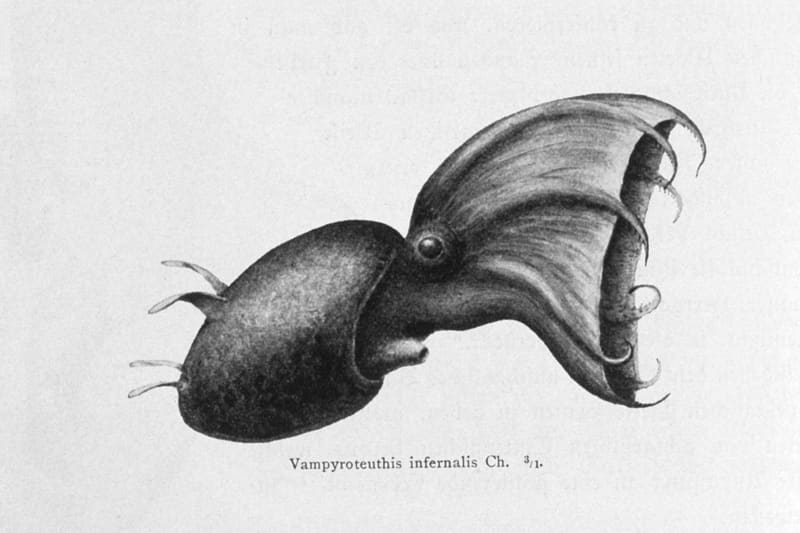
Vampire squid by Carl Chun, 1903. Image from the NOAA Photo Library — Public domain — Wikimedia Commons Despite the name it is not a predator. It drifts in low-oxygen water and collects marine snow — the slow fall of organic particles from above — using two long retractable filaments.
-
Number 5: The yeti crab, which farms its own food
Illustration: World of Curious Discovered near hydrothermal vents, its hairy claws host colonies of bacteria that it appears to cultivate and then eat. It has been observed waving its claws in the vent flow, apparently to feed the bacteria.
-
Number 4: The dumbo octopus, which flies rather than swims
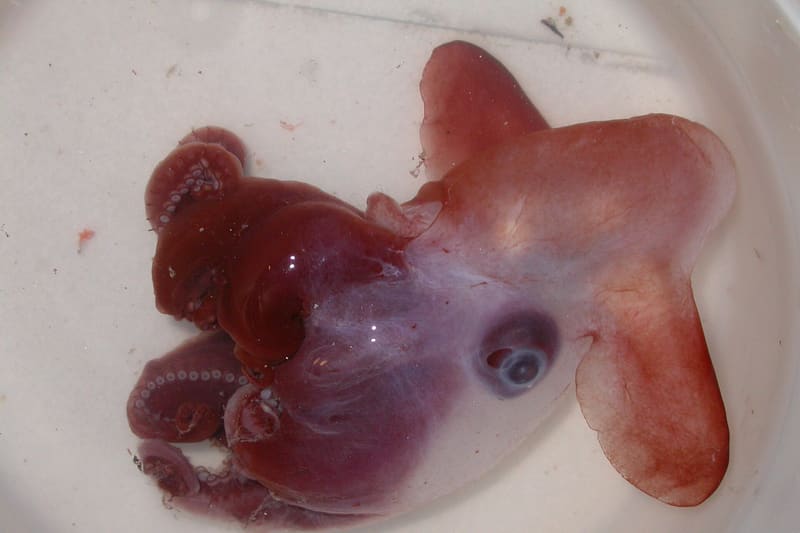
Mike Vecchione, NOAA — Public domain — Wikimedia Commons It moves by flapping two ear-like fins, and lives deeper than any other octopus. Living at extreme depth means it never encounters daylight, and it has no ink sac, because there is nothing to hide from in the dark.
-
Number 3: The sea pig, which walks on water-filled legs
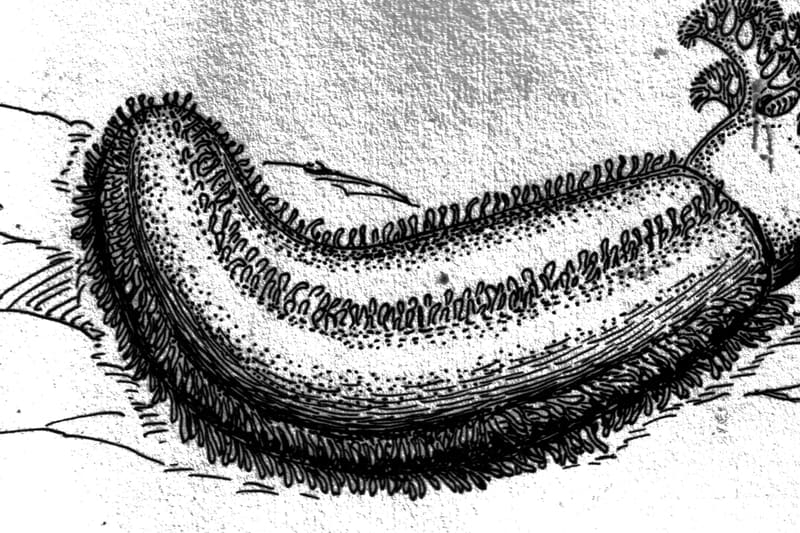
Pearson Scott Foresman — Public domain — Wikimedia Commons A type of sea cucumber that moves across the abyssal plain on inflatable tube feet, processing sediment. They are often found in large aggregations, all facing the same direction, which is thought to relate to how they detect food.
-
Number 2: The giant isopod, a woodlouse the size of a cat
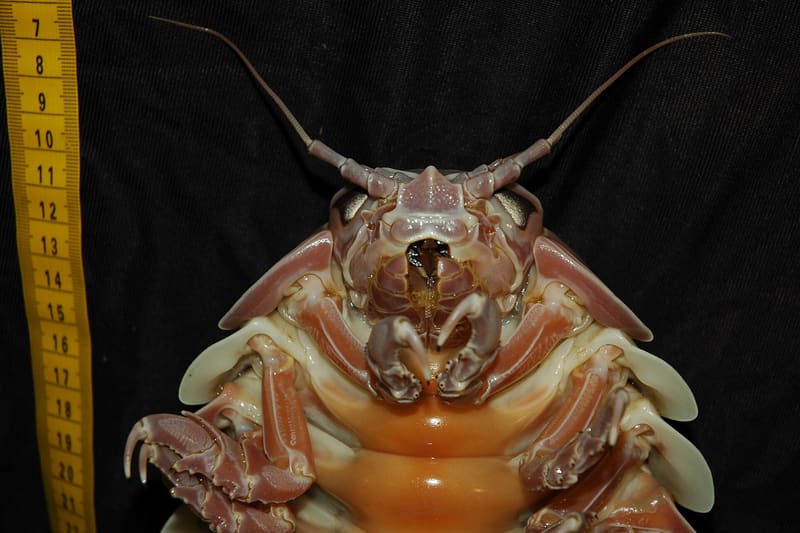
Expedition to the Deep Slope 2006, NOAA-OE — Public domain — Wikimedia Commons Closely related to the woodlouse in your garden, but scaled up enormously — a phenomenon known as deep-sea gigantism, seen in several unrelated groups. They can go extraordinarily long periods without eating.
-
And the strangest one of the lot
Number 1: The siphonophore, an animal that is really a colony
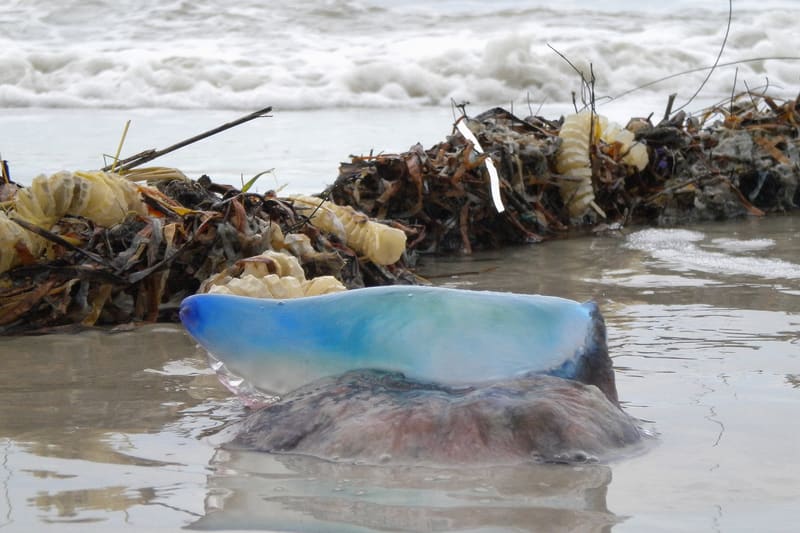
U.S. Fish and Wildlife Service Southeast Region — Public domain — Wikimedia Commons This is the one that breaks most people's model of what an animal is. A siphonophore is a single organism made up of many specialised bodies called zooids, each descended from the same fertilised egg, each doing one job — swimming, feeding, reproducing, stinging — and none able to survive alone. One specimen recorded off Western Australia was estimated to have an outer ring around 47 metres long, which would make it among the longest animals ever measured. It is neither one animal nor many, and biology has been arguing about how to describe it for a long time.


_(PSF_S-820005_(cropped)).png)

.jpg)
Most of these were described only in the last century, and several only in the last few decades. Large parts of the deep ocean have still never been directly observed.
Where this came from
- Deep-sea research and ocean exploration — NOAA Ocean Exploration
- Deep sea collections and research — Natural History Museum
- Ocean and marine science — Woods Hole Oceanographic Institution
Read next
 Countdown
 Ten Things Your Body Does Constantly That You Never Notice
Reflexes, corrections and background processes that run without you: ten of them explained in plain language, with no medical advice attached.
 Countdown
 Ten Plants and Fungi With Genuinely Ruthless Strategies
Plants are not passive. Ten species that trap, poison, strangle, hijack or outlive everything around them, with the mechanism explained for each.
 Countdown
 Ten Animals You Have Almost Certainly Never Heard Of
Small, strange and rarely photographed species that never make the documentaries, plus the reason the same few animals always do.