
Amazing Animal Stories Feature
Eight Animals That Travelled Extraordinary Distances, With the Evidence
Tracked migrations, ringed birds and tagged sharks. Eight remarkable animal journeys that were actually measured, plus a famous one that was not.

Animal journey stories are extremely popular and frequently unreliable, because the good ones get retold until the details drift.
The ones below are different: each has a tracking device, a ringing record or a tagging programme behind it. That matters, because measurement is what turns a remarkable anecdote into a remarkable fact.
The bar-tailed godwit that did not land
Satellite tagging of bar-tailed godwits has recorded non-stop flights from Alaska to the southern hemisphere, over open ocean, lasting well over a week. One tracked bird recorded a continuous journey of more than 13,000 kilometres to Tasmania in around eleven days.
The birds nearly double their body weight before departure and shrink some internal organs to save mass. There is nowhere to rest on the route and no opportunity to feed.

.jpg)
The Arctic tern and the longest annual migration
Arctic terns breed in the far north and winter in the Antarctic. Tracking studies following individual birds have recorded annual round trips of tens of thousands of kilometres, considerably longer than the straight-line distance because the birds follow productive ocean routes rather than flying direct.
Over a lifetime, the cumulative distance is frequently compared to several return trips to the Moon.

.jpg)
The humpback whale that crossed oceans
Photo identification of individual humpbacks, using the unique markings on the underside of the tail, has documented movements of many thousands of kilometres between feeding and breeding grounds, including at least one recorded movement between breeding areas in different ocean basins.
Photo ID is a quietly brilliant method: it requires no tagging, and it has built decades-long records of individual animals.
The great white shark tracked across an ocean
Satellite tagging has followed individual great white sharks on long-distance movements between continents, including a documented return journey. The findings substantially changed how the species was understood, having previously been assumed to be largely coastal.


The leatherback turtle
Leatherbacks tracked by satellite have crossed entire ocean basins between nesting beaches and feeding areas. Nesting females return to the region where they hatched, which raises navigation questions that are still being investigated.
The monarch butterfly, over generations
The North American monarch migration is unusual because no individual completes the round trip. Several generations are involved: the butterflies that travel south are not the ones that travelled north, and they are navigating to overwintering sites they have never visited.

.jpg)
Tagging programmes run by volunteers over decades produced much of the evidence.
The dragonfly that crosses the Indian Ocean
Evidence from observation, wind data and population genetics suggests that the globe skimmer dragonfly undertakes a multi-generation migration across the Indian Ocean. For an insect of that size, the distances involved are extraordinary, and the research is ongoing.
The ringed bird that turned up decades later
Bird ringing schemes have run for over a century, and the long-term recovery data is one of the most valuable datasets in ecology. Individual birds have been recorded alive decades after ringing, sometimes returning to the same small area year after year.


It is unglamorous work — a numbered metal ring, a record book — and it has produced more hard information about migration than anything else.
And one that is not evidenced
The story of a pet travelling hundreds of miles across unfamiliar country to find its owners is a genre in itself, and it is worth being honest about.

_(9100052523)_(2).jpg)
Some cases have reasonable documentation, often involving a microchip and a verifiable start point. Many of the most famous accounts predate any way of identifying an individual animal, and rest on the family’s conviction that the animal that arrived was the animal that left.
That is not a reason to dismiss them entirely. It is a reason to notice that the well-evidenced journeys on this page are all longer, stranger and more thoroughly measured than the folklore, which is usually how it goes.
Where this came from
- Bird migration tracking and ringing data — British Trust for Ornithology
- Marine animal tagging and migration research — NOAA Fisheries
- Migration and navigation research — Encyclopaedia Britannica
Read next
 Countdown
 Nine Animals That Use Tools, and How We Actually Know
Tool use in animals is often overstated. Nine cases with genuine experimental or field evidence, and a note on what each study did and did not show.
 Myth or Fact
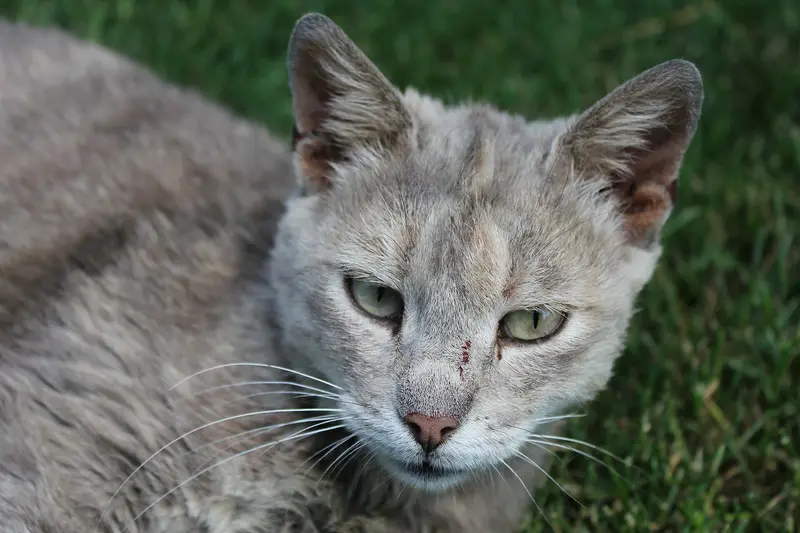
 Nine Things Cats Do, and What the Research Actually Says
Purring, kneading, slow blinking and the noise aimed only at humans. Nine cat behaviours, separated honestly into the well evidenced and the still uncertain.
 Mystery
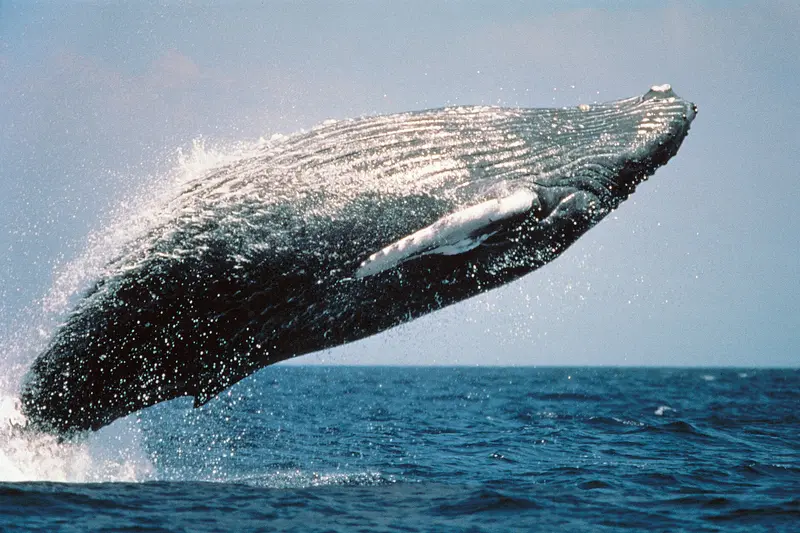
 Seven Animal Behaviours Nobody Can Fully Explain Yet
Genuinely open questions in zoology: whale song, cat purring, magnetic navigation and the mass strandings. What is known, what is guessed, and what is being tested.