
Bizarre Inventions Countdown
Nine Patented Devices That Were Entirely Serious at the Time
Patent archives are full of devices that somebody genuinely believed in. Nine of them, and the real problem each one was trying to solve.

Patent offices keep everything. That makes their archives an unusually honest record of what people were worried about at any given moment, because inventors describe the problem before they describe the solution.
Read them in bulk and you get a picture of daily life that no diary would give you: the specific annoyances, the household dangers, the social rules that were rigid enough to be worth engineering around.
Nine of them, counting up to the reason they all look the way they do.
-
Number 9: The bed that tipped you out in the morning

Illustration: World of Curious Mechanical alarm beds appear in patent records from the late nineteenth century onwards, using clockwork to tilt the sleeper onto the floor at a set time. The problem was real — early alarm clocks were unreliable and heavy sleepers missed shifts — and the solution was decisive.
-
Number 8: Spectacles for chickens

Illustration: World of Curious Patented in the United States in the early twentieth century, and manufactured in quantity. Birds kept in close confinement peck at each other, sometimes fatally; the idea was to obscure forward vision without blinding the bird. They were genuinely used on commercial farms.
-
Number 7: The cyclist's portable typewriter mount
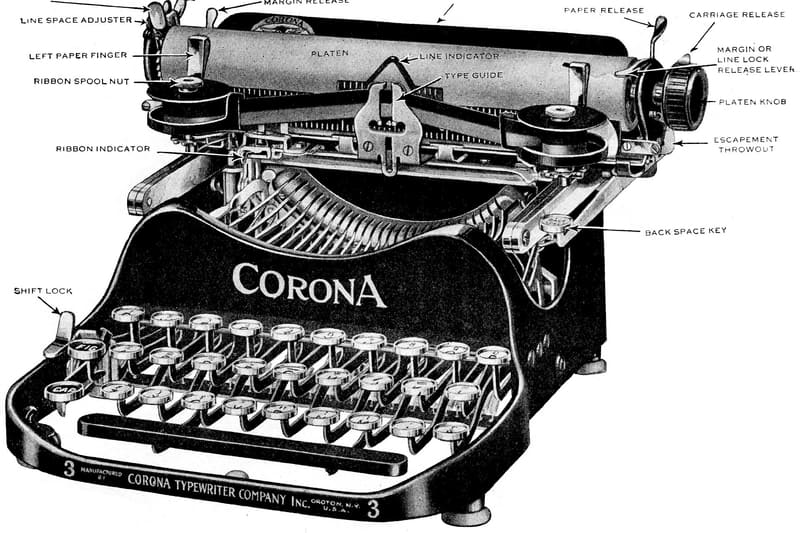
Anonymous Unknown author — Public domain — Wikimedia Commons The late Victorian period produced an enormous number of devices designed to let people do one thing while doing another, driven by the same optimism about mechanisation that produced the bicycle boom. Most were patented, few were built, and almost none sold.
-
Number 6: The baby cage that hung out of a window
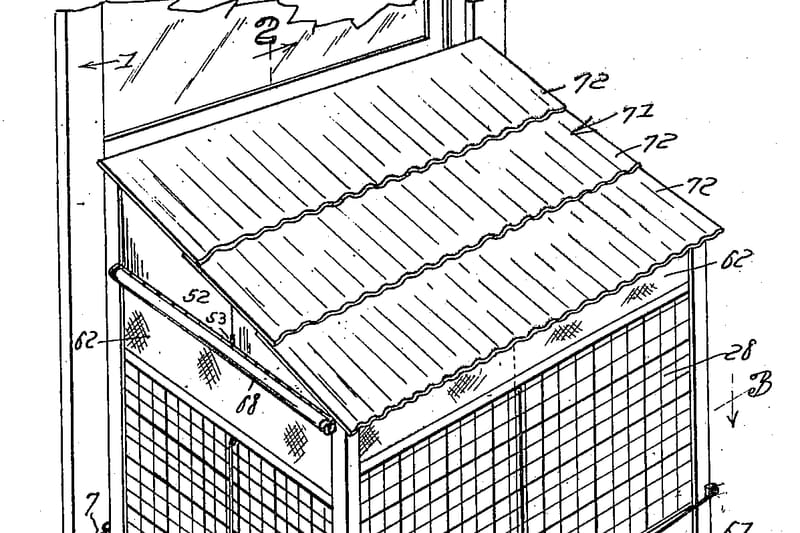
Inventor Emma Read, by Watson E. Coleman Attorney — Public domain — Wikimedia Commons Wire cages for babies, bolted to the outside of upper-storey windows, were patented and used in the early twentieth century. The underlying advice was mainstream at the time: fresh air was considered essential for infant health, and city flats had no gardens.
-
Number 5: The moustache guard for teacups

Illustration: World of Curious A ledge fitted inside a cup to keep a large waxed moustache clear of the tea. Ridiculous now, entirely practical in a period when elaborate facial hair was fashionable and moustache wax melted in hot steam.
-
Number 4: The hat that raised itself

Illustration: World of Curious A patented mechanism that lifted a gentleman's hat automatically when he nodded, for greeting people when his hands were full. Filed in the nineteenth century, when hat etiquette was strict enough that failing to raise one mattered socially.
-
Number 3: The illuminated bicycle wheel with a built-in dynamo
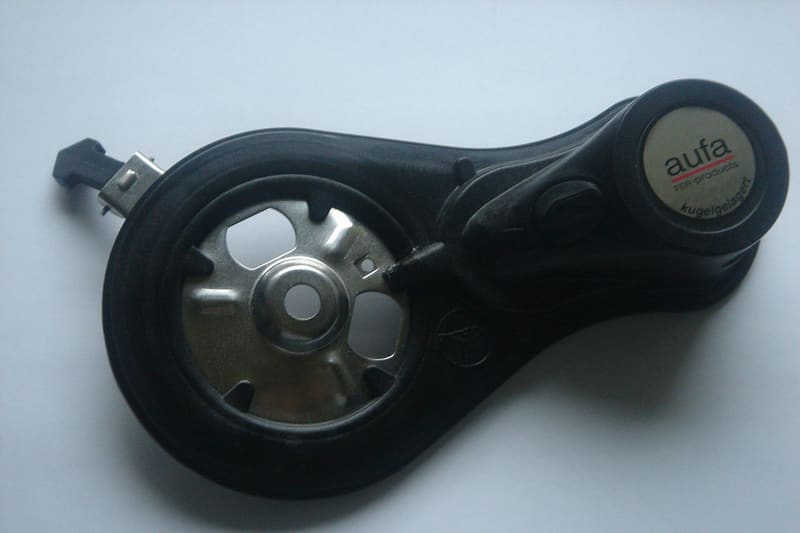
ocrho — Public domain — Wikimedia Commons An example of the opposite case: an invention that looks eccentric in its original patent drawings and turned out to be entirely correct. Dynamo lighting became standard equipment for decades.
-
Number 2: The vacuum-tube postal system
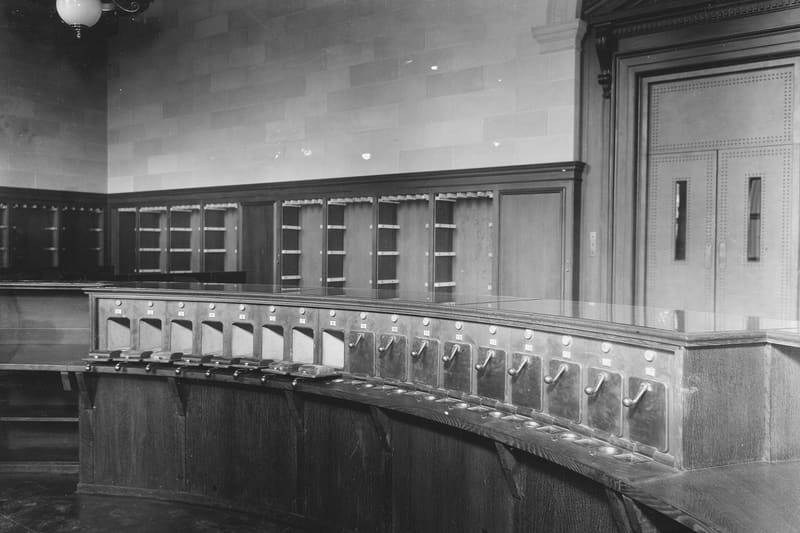
The U.S. National Archives — Public domain — Wikimedia Commons Networks of pneumatic tubes carried letters and small parcels beneath several major cities from the nineteenth century onwards, and some ran well into the twentieth. They worked. They were simply overtaken by faster road transport and then by the telephone.
-
And the strangest one of the lot
Number 1: The device that made no sense until you knew the problem

Illustration: World of Curious This is the pattern behind every item on the list. A patent drawing stripped of its context always looks absurd, because the context is where the sense lives — a world with no refrigeration, no reliable clocks, no electric light, strict social rules about hats, and cities choked with horse traffic. Patent archives are one of the best records we have of what ordinary life was actually like, precisely because inventors were documenting problems that were too mundane for anyone else to write down. The eccentric ones are not failures of imagination. They are solutions to problems that have since been solved some other way, or have simply stopped existing.


.jpg)


.jpg)
Worth remembering when a modern gadget looks ridiculous: about one in ten of them is the dynamo, and the rest are the moustache guard.
Where this came from
- Patent collections and industrial design archives — Science Museum Group
- History of invention and patent records — Smithsonian Institution
- Design and manufacturing collections — Victoria and Albert Museum

Read next
 Myth or Fact
 Eight Famous Strange Laws That Are Completely Made Up
Most viral lists of bizarre laws are wrong. Here are eight of the most repeated ones, what is actually true underneath them, and why they will not die.
 Countdown
 Nine Deep-Sea Creatures That Barely Look Real
The deep ocean is the largest habitat on Earth and the least visited. Nine of its residents, and the specific problem each one has evolved to solve.
 Countdown
 Eight Places in the Solar System With Genuinely Bizarre Weather
Sideways glass rain, a storm older than photography, and a moon with rivers of methane. Eight places where the weather report would be unprintable.