
Strange Laws & Rules Myth or Fact
Eight Famous Strange Laws That Are Completely Made Up
Most viral lists of bizarre laws are wrong. Here are eight of the most repeated ones, what is actually true underneath them, and why they will not die.

There is a whole genre of list built on strange laws, and most of it is wrong.
The pattern is depressingly consistent. Somebody repeats a claim, somebody else copies it, and within a few years it appears in books and news articles with no citation anywhere in the chain. Legal bodies have occasionally had to issue statements pointing out that famous examples do not exist.
Here are eight of the most repeated, with what is actually underneath them.
-
Number 8: You may not die in Parliament

Julian Herzog — CC BY 4.0 — Wikimedia Commons Frequently voted one of the most absurd British laws, and not a law at all. It appears to have grown from a misunderstanding about coroners' jurisdiction over royal palaces. There is no statute making it an offence, and it would be unenforceable if there were.
-
Number 7: It is legal to shoot a Welshman with a longbow under certain conditions
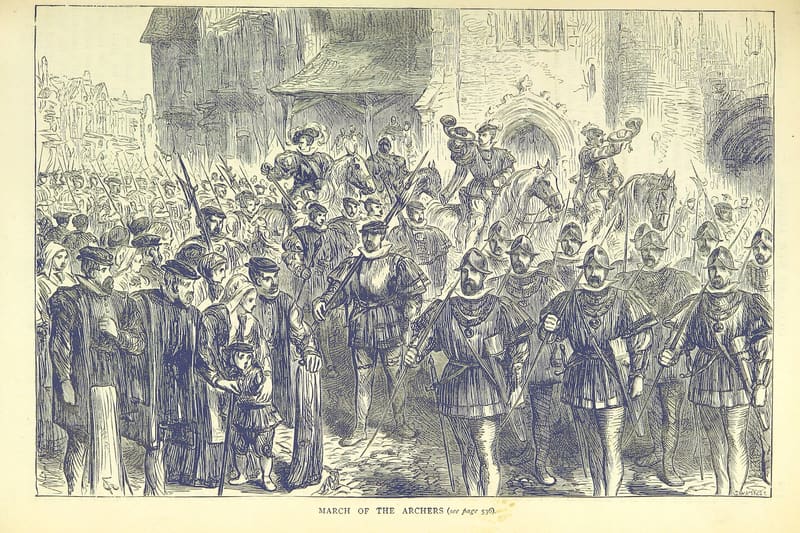
Joseph Swain — Public domain — Wikimedia Commons A perennial favourite in slightly different versions depending on which English city is telling it. No such provision has been found in any surviving statute, and even genuinely archaic laws were swept up by later repealing legislation.
-
Number 6: Carrying a plank along a pavement is illegal
Harold William Hailstone — Public domain — Wikimedia Commons This one has a real ancestor. Nineteenth-century police and highway legislation did contain provisions about obstructing footways with things like planks, barrels and wheels, aimed at keeping pavements passable. The modern retelling drops the context and turns a sensible obstruction rule into an absurdity.
-
Number 5: A pregnant woman may relieve herself anywhere, including in a policeman's helmet

C.S. Imming — CC BY-SA 3.0 — Wikimedia Commons Widely repeated, never sourced. No statute has been produced. It appears to be entirely folkloric, and it keeps circulating because it is a good line.
-
Number 4: It is illegal to handle a salmon suspiciously
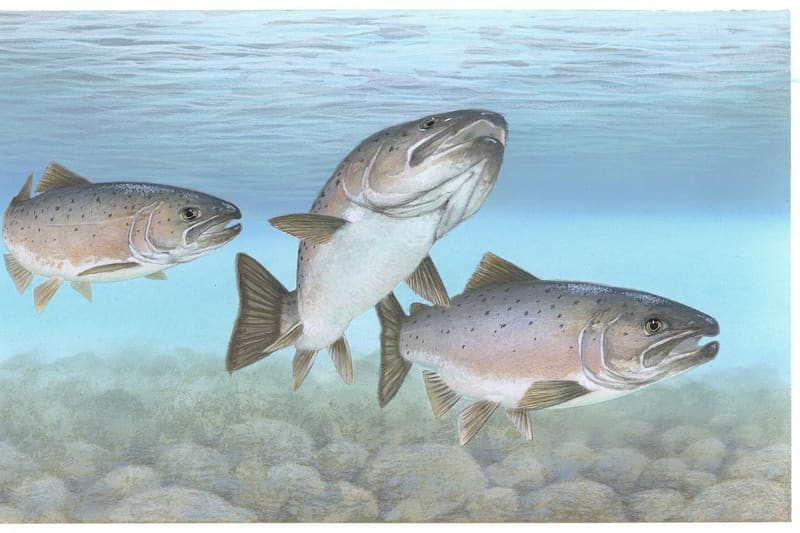
Timothy Knepp, U.S. Fish and Wildlife Service — Public domain — Wikimedia Commons This one is real, and it is not absurd. The Salmon Act 1986 in the UK contains a provision about handling salmon in suspicious circumstances, aimed at the trade in illegally caught fish. Read in context it is an ordinary anti-poaching measure with an unfortunate name.
-
Number 3: Old laws are still technically in force unless someone repeals them
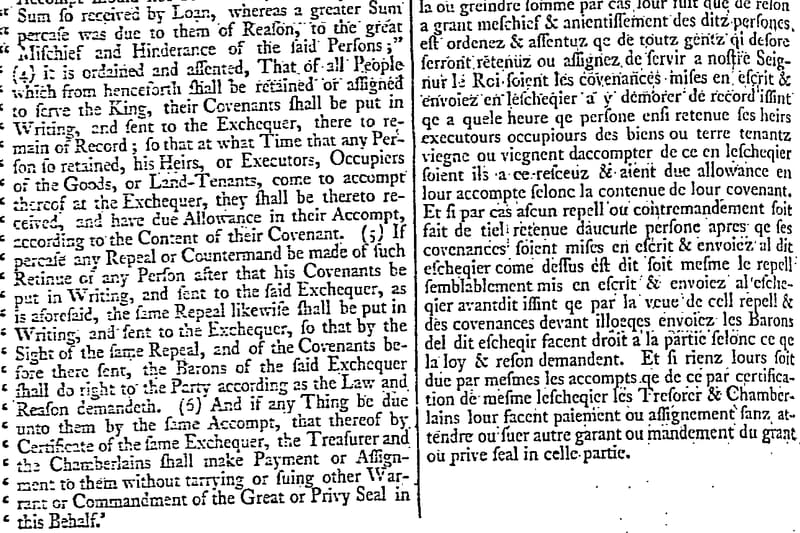
Ruffhead, Owen — Public domain — Wikimedia Commons Partly true and usually overstated. Many jurisdictions have run large repeal programmes specifically to remove obsolete statutes, and in England and Wales that work has been ongoing for well over a century. Plenty of the laws in viral lists were repealed decades ago.
-
Number 2: A local by-law in some town bans something ridiculous

Adrian Cable — CC BY-SA 2.0 — Wikimedia Commons This is the shape of most of these stories, and it is the hardest to check, because by-laws are genuinely local, genuinely numerous and often genuinely odd. That is exactly why invented ones spread: the claim is plausible and the verification is tedious.
-
And the strangest one of the lot
Number 1: The reason all of this keeps circulating

Sam Hood — Public domain — Wikimedia Commons Legal myths persist because checking them is much harder than repeating them. Statutes are long, amended repeatedly, and scattered across centuries of legislation, so tracing a claim back often means reading the original text and every later amendment. Meanwhile the claim itself is one sentence and a good joke. The pattern is reliable: a strange law that comes with a specific statute name and section number is usually real and usually has a sensible purpose, and one that comes with no citation at all is usually invented.


_1.535_-_March_of_the_Archers.jpg)


The genuinely odd laws are more interesting than the invented ones, because the reason they exist is always a story about something that actually happened.
Editor's note: Nothing here is legal advice. Laws vary by jurisdiction and change; if a rule actually matters to you, check the current legislation for where you are.
Where this came from
- Statements on commonly repeated legal myths — The Law Commission
- Parliamentary records and archives guidance — UK Parliament
- Legal history reference — Encyclopaedia Britannica
Read next
 Myth or Fact
 Twelve Foods That Are Not Botanically What You Think They Are
Bananas are berries, strawberries are not, and almonds are not nuts. Twelve everyday foods in the wrong category, with the actual rule explained.
 Myth or Fact
 Eight Famous Film Production Stories, and Which Ones Hold Up
Film sets generate legends faster than any other workplace. Eight of the most repeated stories, sorted into the documented, the disputed and the invented.
 Myth or Fact
 Myth or Fact: Eight Things Everyone Says About the Pyramids
Slaves, aliens, mummy curses and the cat that was worshipped. Eight widely repeated claims about ancient Egypt, checked against the evidence.